Do Artificial Sweeteners Make You Hungrier? What the Brain and Gut Research Shows
If you drink a diet soda at 2 in the afternoon to make it to dinner, this one is for you. A 2025 study in the journal Nature Metabolism gave 75 young adults a drink made with sucralose or a drink made with sugar. After the sucralose drink they felt hungrier. Brain scans also showed more blood flow in the part of the brain that controls hunger.
For where these sweeteners came from and the common myths, start with Why Zero Calories Doesn't Mean Zero Consequences After 40.
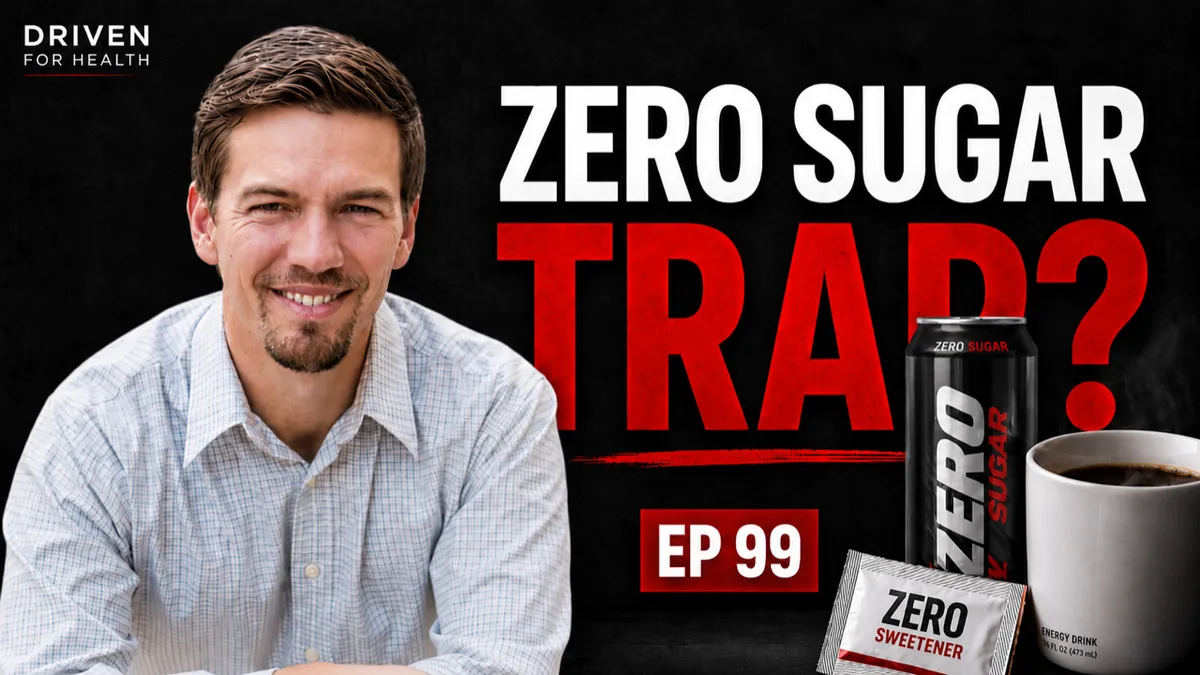
Every major artificial sweetener on the market today came from a lab accident. The FDA approved them. The WHO told people not to use them long-term. This episode walks through what nine years of data on 100,000 people found, what four myths look like when tested by research, and what two better options hold up under scrutiny.
Where Artificial Sweeteners Came From
The origin story matters because it tells you something about how these compounds entered the food supply.
In 1879, a chemist named Constantin Fahlberg was working at Johns Hopkins on coal tar derivatives. He forgot to wash his hands before lunch. He picked up a piece of bread and noticed something was wrong. It tasted intensely sweet. He ran back to the lab and tasted every beaker until he found the compound. That compound became saccharin.
In 1965, a chemist named James Schlatter was working on an anti-ulcer drug. He licked his finger while turning a page of his notes. The compound he tasted became aspartame.
In 1976, a researcher named Shashikant Phadnis was told by his supervisor to test a chlorinated sugar compound. He misheard it. He thought he was told to taste it. That compound turned out to be 600 times sweeter than sugar. That became sucralose.
Every major artificial sweetener in circulation today came from a lab accident. None of them started in a kitchen or a health initiative. No one designed them to help men lose weight.
What the FDA Says vs. What the WHO Says
The FDA has approved six artificial sweeteners: saccharin, aspartame, acesulfame-K, sucralose, neotame, and advantame. The FDA reviewed the research, set daily limits, and concluded these are safe at normal consumption levels.
To put the limits in context: the FDA's daily limit for aspartame is 50 milligrams per kilogram of body weight. For a 180-pound man, reaching that limit would require drinking somewhere between 18 and 19 cans of diet soda every single day.
In 2023, the World Health Organization issued a formal advisory telling people not to use non-sugar sweeteners for long-term weight control. Their concern was years of daily use and what that pattern does to cardiovascular health, blood sugar regulation, and type 2 diabetes risk.
Two credible institutions reviewed the same substance and reached different conclusions. The FDA says you're fine at these doses. The WHO says the long game concerns us. For men in their 40s and 50s who are already working through elevated blood sugar, extra weight, or cardiac risk numbers, that gap matters.
Four Myths the Research Has Tested
Myth one: Artificial sweeteners cause cancer.
The National Cancer Institute and the FDA both state clearly that there is no consistent evidence linking artificial sweeteners to cancer in humans. Studies on rats are real, but the doses used in those studies were far beyond anything a human would ever consume in a lifetime. On cancer specifically, based on current evidence in humans, this concern is not well-supported by the science.
Myth two: Artificial sweeteners are a free pass for weight loss.
In 2025, researchers at USC ran a brain imaging study. They found that sucralose, the main ingredient in Splenda, increased blood flow to the hunger center of the brain more than regular sugar did. The thing most men switched to because it was supposed to help them eat less sends stronger hunger signals to the brain than regular sugar does.
Myth three: Artificial sweeteners don't affect blood sugar.
A study published in the journal Nature, out since 2014 and replicated many times since, showed that saccharin, sucralose, and aspartame can drive glucose intolerance by disrupting the bacterial balance in the gut. The researchers confirmed this in healthy human subjects. Real people with no prior metabolic issues showed measurable changes in their glucose response after consuming these sweeteners. Your blood sugar can be affected by something that contains zero grams of sugar.
Myth four: A "natural" label means the product is clean.
Stevia and monk fruit are generally better options, and the episode covers both shortly. But many stevia and monk fruit products on store shelves have been processed and blended with erythritol and other fillers. The word natural on a food label is one of the least regulated claims in the entire food industry.
What Nine Years of Data Shows
Short-term studies miss what longitudinal research finds.
A French research project called the NutriNet-Santé cohort followed over 100,000 adults for nine years. The people with the highest consumption of aspartame and acesulfame-K had between 9 and 18 percent higher risk of cardiovascular disease compared to people not consuming them.
A 2024 review published on PubMed confirmed that saccharin and sucralose were specifically tied to gut disruption, glucose intolerance, and systemic inflammation across longer study periods.
A 2025 observational study, picked up by CNN, found that people consuming the most low and no-calorie sweeteners showed a 62 percent faster rate of cognitive decline compared to those consuming the least. This is an observational study, which means it tracks patterns in a population but cannot prove direct cause and effect on its own. Still, a 62 percent difference across a large population is not a number to ignore.
One note of context: researcher Menno Henselmans published a 2025 review arguing that many of the negative findings are driven by reverse causality. People who are already metabolically unwell tend to start using more sweeteners because they are trying to manage their condition, not because the sweeteners made them sick. He argues that when studies account for that bias, the negative associations shrink. That context matters and you should have it.
The Gut Connection Most Content Skips
Deep in the gut, trillions of bacteria produce a compound called butyrate. Butyrate keeps the gut lining healthy and helps cells stay responsive to insulin. When the body produces enough butyrate, blood sugar handling works better. When butyrate production drops, insulin resistance tends to go up.
The Nature study referenced above showed that saccharin, sucralose, and aspartame reduce butyrate production by disrupting that bacterial balance. Researchers confirmed this in healthy human subjects. For a man managing prediabetes or type 2 diabetes, this is a specific process that can happen in the gut every time he consumes something labeled zero sugar.
A 2025 review published in PubMed described artificial sweeteners as a double-edged sword for the gut microbiome. They reduce calorie intake but disrupt the bacterial diversity that supports metabolism. When that diversity drops, energy and immune function both suffer. Blood sugar regulation becomes harder to manage.
Brian has seen this in practice. Men inside his program have pulled their continuous glucose monitor data after two weeks of cutting artificial sweeteners and watched their morning fasting glucose drop 10 to 15 points without changing anything else. Same meals. Same workouts. Same sleep. Just removed the sweeteners.
Dr. Mark Hyman has made this case for years: artificial sweeteners trick the brain into ramping up insulin production while slowing metabolism, leaving men hungrier and craving more carbohydrates. Dr. Casey Means co-founded Levels Health and has analyzed over 51 million data points on human glucose response. She makes the same case from the data side. Foods that do not directly spike blood sugar can still drive insulin resistance through gut pathways. Zero on the glycemic index does not mean zero biological impact.
When Replacing Sugar With Sweeteners Actually Helps
The research is not entirely negative. Researchers tracked nearly 1,800 people across six separate studies. When people replaced regular sodas with artificially sweetened versions, their BMI dropped by a small but measurable amount in the short term. That is a real finding.
But when researchers followed people over longer periods, the story changed. Over time, people who habitually consumed artificially sweetened beverages showed type 2 diabetes risk levels comparable to people still drinking regular sugary drinks. The short-term benefit levels off.
The American Diabetes Association acknowledges that these sweeteners can reduce calorie intake and help blood sugar control in the short term. Their guidance is clear: this works best as a temporary bridge toward broader dietary change, not as a permanent strategy. Swapping a Coke for a Diet Coke is a step. If the next step never happens, one set of problems gets traded for a different one.
Two Better Options
Not all sweeteners work the same way in the body.
Monk fruit. Available in zero-calorie form. Carries GRAS status from the FDA (generally recognized as safe). No blood sugar impact in clinical crossover studies. Shows early signs of supporting gut health rather than disrupting it. No significant reported side effects in current literature. Brian recommends pure monk fruit extract for coffee. Check the label for erythritol or other fillers. Many products blend them in.
Stevia. Also zero calorie. Also GRAS. Minimal direct impact on blood sugar compared to synthetic options. No gut-disrupting patterns linked to aspartame or sucralose in current research. Some people experience digestive discomfort at higher doses. A solid option and a meaningful upgrade from the synthetic alternatives.
Neither stevia nor monk fruit showed the brain-based hunger-signaling effect that sucralose showed in the 2025 USC study.
Four Steps to Take This Week
Step one: Read your labels. Look for aspartame, sucralose, acesulfame-K, and saccharin. They show up in protein bars, flavored sparkling waters, yogurts, and vitamins. Check medications too.
Step two: Run a transition protocol. Week one: swap diet sodas and artificially sweetened drinks for sparkling water with fresh lemon, lime, or orange. Week two: swap your coffee sweetener for pure monk fruit. Week three: clear out the packaged diet snacks loaded with sucralose and acesulfame-K.
Step three: Track your glucose. If you manage type 2 diabetes or prediabetes, a CGM or a daily fasting glucose log will show you whether artificially sweetened products are affecting your numbers.
Step four: Reduce the overall sweetness of your diet over time. WHO advisor Francesco Branca recommends reducing total sweetness rather than just swapping one sweet thing for another. Taste receptors recalibrate. As baseline sweetness exposure drops, cravings for sweet foods tend to follow.
Frequently Asked Questions
What did the 2025 USC brain imaging study find about sucralose?
Researchers at USC found that sucralose, the main ingredient in Splenda, increased blood flow to the hunger center of the brain more than regular sugar did. The compound most men switch to for weight control sends stronger hunger signals to the brain than regular sugar. This helps explain why artificially sweetened drinks have not moved the scale the way many men expected.
Do artificial sweeteners affect blood sugar?
Yes. A study published in the journal Nature, out since 2014 and replicated many times since, showed that saccharin, sucralose, and aspartame can drive glucose intolerance by disrupting gut bacteria. The researchers confirmed this in healthy human subjects with no prior metabolic issues. Your blood sugar can be affected by something that contains zero grams of sugar. This is one of the first areas Brian addresses when a man's fasting glucose is not moving.
What is the NutriNet-Sante study and what did it find?
The NutriNet-Sante cohort is a French research project that followed over 100,000 adults for nine years. The people with the highest consumption of aspartame and acesulfame-K had between 9 and 18 percent higher risk of cardiovascular disease compared to those not consuming them. This is one of the largest and longest-running nutrition studies available on this question.
What did the WHO say about artificial sweeteners in 2023?
In 2023, the World Health Organization issued a formal advisory telling people not to use non-sugar sweeteners for long-term weight control. Their concern was years of daily use and what that pattern does to cardiovascular health, blood sugar regulation, and type 2 diabetes risk. This put the WHO in a different position from the FDA, which has approved these sweeteners at standard consumption levels.
What is the gut microbiome connection to artificial sweeteners?
Gut bacteria produce a compound called butyrate, which keeps the gut lining healthy and helps cells respond to insulin. The Nature study showed that saccharin, sucralose, and aspartame reduce butyrate production by disrupting bacterial balance. This was confirmed in healthy human subjects. A 2025 PubMed review described artificial sweeteners as a double-edged sword for the gut microbiome: useful for reducing calories, harmful to the bacterial diversity that supports metabolism and blood sugar regulation.
Can cutting artificial sweeteners improve fasting glucose?
Brian has seen men inside his program pull their CGM data after two weeks of cutting artificial sweeteners and watch their morning fasting glucose drop 10 to 15 points without changing anything else. Same meals, same workouts, same sleep. The change was removing the sweeteners. This outcome shows up consistently enough that it is one of the first things Brian addresses when a man's fasting glucose is not moving as expected.
What are better natural alternatives to artificial sweeteners?
Stevia and monk fruit are the two options worth considering. Both are zero calorie and carry GRAS status from the FDA. Neither shows the gut-disrupting patterns linked to aspartame or sucralose in current research. Neither showed the brain-based hunger-signaling effect that sucralose showed in the 2025 USC study. Monk fruit showed no blood sugar impact in clinical crossover studies and shows early signs of supporting gut health.
What does Brian recommend for sweetening coffee?
Brian recommends pure monk fruit extract. It has no blood sugar impact in clinical studies, no gut disruption pattern in current research, and no significant reported side effects. The key is to check the label: many monk fruit products are blended with erythritol or other fillers. Look for pure monk fruit extract on the ingredient list.
Listen to Episode 99 of Driven For Health for the full conversation.