
The Nutrition Pyramid for Men Over 40: Why Calories Come First
Every diet that works does one thing: it changes your calorie balance. This episode covers why that one factor accounts for 70 to 80 percent of your result, and how two clients used it to change their bodies after 40.
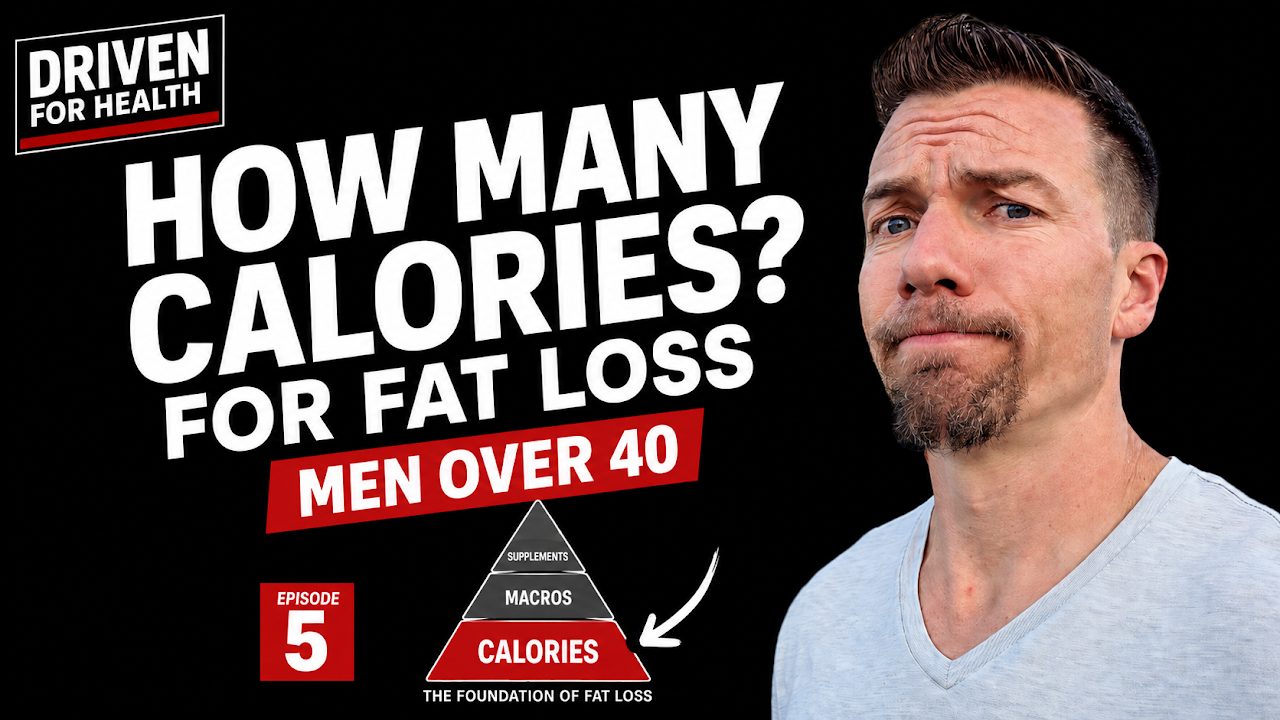
The Nutrition Pyramid: Why Calories Come First
The Nutrition Pyramid ranks five factors by importance: energy balance, macronutrients, micronutrients and hydration, meal timing, and supplements. Each level up matters less than the one below it. Energy balance sits at the foundation. It determines more of your result than all four levels above it combined. Men who track macros without getting their total calories right tend to stall. Supplements cannot fix a calorie imbalance. Most diet approaches that produce results do so because they create a calorie deficit. Low-carb diets, intermittent fasting, and Mediterranean eating all work this way. Each one cuts calories through a different set of rules. The calorie result is the same.
Energy Balance Is 70 to 80 Percent of Results
Energy balance decides most of your outcome. It accounts for 70 to 80 percent of your results, regardless of your goal. A calorie deficit produces fat loss. Eating slightly above maintenance supports muscle growth. Match your intake to your output to hold weight steady. Your exact calorie target depends on your body weight, activity level, and goal.
How to Estimate Your Maintenance Calories
Take your body weight in pounds and multiply by about 10 for a baseline. Then adjust for activity level. A 200-pound man starts at about 2,000 calories a day. A desk job with little movement might land him at 2,400 to 2,600. Heavy training and an active job could push him to 3,500 or more. Everyone burns energy differently. Daily movement, posture, and fidgeting all contribute. Researchers call this pattern NEAT. Start with a ballpark number. Track your weight and performance for two to three weeks. Then adjust based on what you see.
Fat Loss Targets That Work
A safe fat loss rate is 0.5 to 1 percent of your body weight per week. For a 200-pound man, that means 1 to 2 pounds a week. That requires a daily deficit of 500 to 1,000 calories. A deficit deeper than that puts muscle at risk alongside the fat. Body weight falling faster than 1 percent per week is a sign the deficit is too aggressive.
Muscle Gain Targets for Men Over 40
Muscle grows slowly, much slower than fat drops. Beginners can expect to gain 2 to 3 pounds a month. Women typically gain about half that. Intermediate lifters should expect 1 to 2 pounds a month for men and 0.5 to 1 pound for women. Advanced lifters get more from focusing on strength gains and recovery quality than from tracking the scale. A small calorie surplus supports this pace. Beginners can add about 300 calories a day. Intermediates need 100 to 200 extra calories. Advanced lifters often need no surplus at all, since most of their progress comes from training quality.
Tony's Turnaround: From Skinny-Fat to Athletic
Tony was 49 and had felt skinny-fat for 15 years. He lifted in his 20s and stopped once his kids were born. When he returned to training, he ate clean on paper but got the balance wrong: too little protein and too much fat. His body lacked the protein it needed to build tissue. He trained hard but built no muscle or strength. Once he fixed his energy balance, he had enough fuel to add muscle without excess fat storage. He got enough protein to build muscle and matched his carbs to his training load. Fat intake covered the hormonal baseline. He lost 18 pounds and dropped from a 38-inch waist to a 34-inch waist. He looked athletic again, and his wife and kids noticed.
Jay's Turnaround: Fat Loss on the Road
Jay works in sales and lives out of hotels and airports. He told Coach Brian he had no time for the gym and no control over his meals. His schedule changed every week, so a rigid plan never lasted. Coach Brian built the plan around energy balance. That gave Jay room to adapt when his schedule shifted. He learned to navigate restaurant menus and train in short hotel sessions. Staying consistent on the road became manageable once Coach Brian set the calorie target. He lost 22 pounds and walked into his next sales meeting with more confidence.
Putting This Into Practice
Set your maintenance calories first. Your body weight in pounds times 10 is the starting point. Adjust up or down based on your activity level. A 200-pound man with a desk job likely needs 2,400 to 2,600 calories a day to hold his weight steady. Heavy training pushes that number to 3,500 or more.
Choose a goal and set the right calorie target. For fat loss, aim for a daily deficit of 500 to 1,000 calories. Adding 100 to 300 calories above maintenance supports muscle gain, with the exact amount depending on your experience level. Track your body weight and performance for two to three weeks. Adjust the calorie target based on what you see.
Two to three weeks is the minimum to trust the trend. A high-sodium meal can temporarily add water weight. Missing one training session also changes calorie burn for that day. The average weight trend over two to three weeks tells you whether your calorie target needs an adjustment.
Once your energy balance is consistent, move up the pyramid. Protein, carbohydrates, and fat sit at the next level. The ratios become meaningful after total calories are working.
Nutrition Pyramid Recap
Energy balance accounts for most of your results, whether your goal is fat loss or muscle gain. Every food can fit your plan when total calories line up with the goal. Get your energy balance right first. Macronutrients, meal timing, and supplements only add value once the calorie foundation is set.
Listen to Episode 5 for the full breakdown, including how to move up the pyramid once you dial in your calories.
For more on this episode, read the companion post on the Podpage blog: How Many Calories Should You Eat to Lose Fat After 40?.
Common Questions From This Episode
What is the Nutrition Pyramid?
The Nutrition Pyramid ranks five factors by importance: energy balance, macronutrients, micronutrients and hydration, meal timing, and supplements. Energy balance sits at the bottom and accounts for 70 to 80 percent of your results.
Why do calories matter most for fat loss?
No diet style works without the right calorie balance. A calorie deficit leads to fat loss. Eating slightly above maintenance supports muscle growth. When intake matches output, weight holds steady. Macros, timing, and supplements only add value once the calorie level is right.
How do I estimate my maintenance calories?
Take your body weight in pounds and multiply by about 10 for a baseline. Then adjust based on your activity level. A 200-pound man might need 2,400 to 2,600 calories at a desk job or 3,500 or more with heavy training.
What is a good fat loss rate per week?
Aim for 0.5 to 1 percent of your body weight per week. For a 200-pound man, that means 1 to 2 pounds a week. That comes from a daily deficit of 500 to 1,000 calories.
What is a good muscle gain rate per month?
Beginners can gain 2 to 3 pounds a month for men or about half that for women. Intermediate lifters should expect 1 to 2 pounds a month for men and 0.5 to 1 pound for women. Advanced lifters should focus on strength and recovery instead of the scale.
What is NEAT and why does it matter?
NEAT stands for Non-Exercise Activity Thermogenesis. It covers the calories you burn through daily movement outside of formal exercise, including walking, posture shifts, and fidgeting. Two men with similar gym schedules can have different calorie needs because of NEAT.
How did Tony lose 18 pounds and change his body?
Tony was 49 and had felt skinny-fat for 15 years. Coach Brian set protein high enough to support muscle growth and adjusted carbs and fat to match. He lost 18 pounds and dropped from a 38-inch waist to a 34-inch waist.
How did Jay lose 22 pounds while traveling for work?
Jay works in sales and travels constantly. Coach Brian built the plan around energy balance. That gave Jay room to adapt when his schedule shifted. He lost 22 pounds and walked into his next sales meeting with more confidence.
How do I know if I am in a calorie deficit?
Track your body weight weekly under similar conditions. If you are losing 0.5 to 1 percent of your body weight per week, your deficit is working. If the scale holds steady or rises over two to three weeks, you are not in a deficit. Your intake matches or exceeds what you burn.
Are some foods good or bad for fat loss?
No single food makes or breaks fat loss. Your total calories and overall diet determine your results, so any food can fit a plan built around the right energy balance.
What comes after getting calories right?
The next step in the Nutrition Pyramid is macronutrients: protein, carbohydrates, and fat. Once your total calorie target is set and working, adjusting the ratios helps you hit protein targets, support training, and manage energy across the day.
Do I need to count calories every day?
Start by tracking for two to three weeks to establish your calorie baseline. Once you know how your body responds to a given intake level, weekly weight trends become your guide. Those trends tell you whether the calorie target needs adjustment. Periodic tracking becomes more reliable than daily counting once you build the habit.