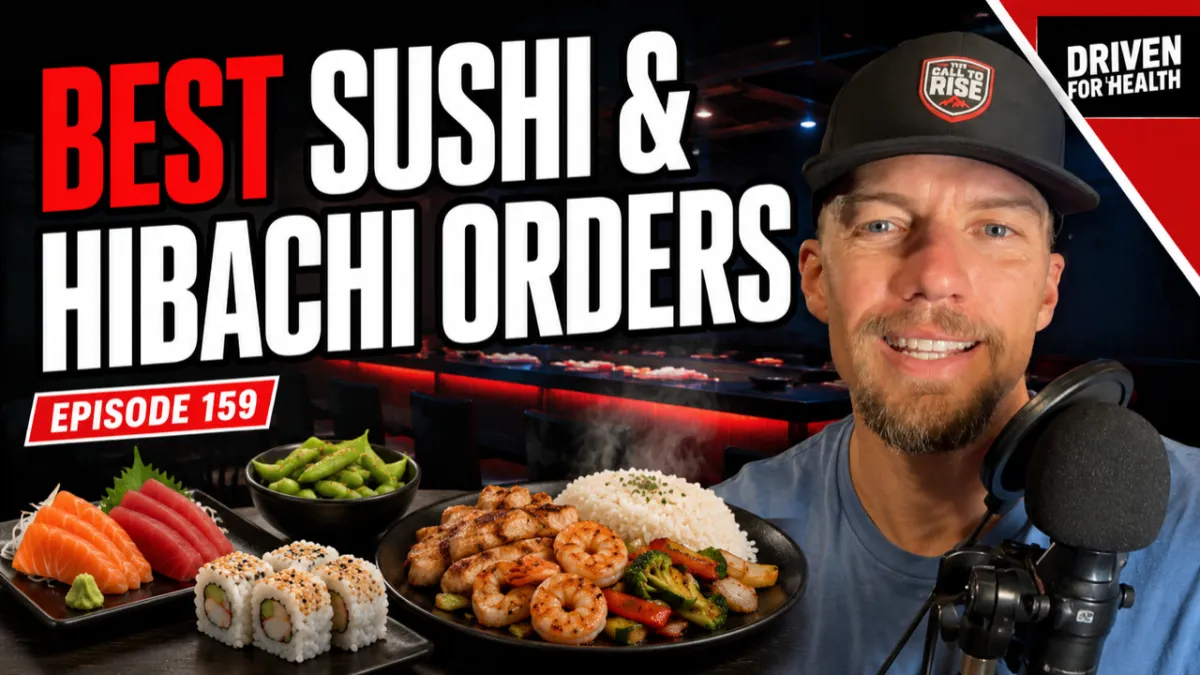
The Menu Words That Decide Your Japanese Dinner
Sushi and hibachi both get treated as the responsible night out. Neither restaurant is automatically good or bad for you and the order decides which one it becomes. This post covers the menu words that signal a loaded roll and the two orders worth memorizing.
Read how to spot a fried roll on a sushi menu before you order.
A crunchy shrimp roll and a shrimp avocado roll sit on the same menu at the same restaurant. One costs more than twice the other. This episode covers how to order at a sushi bar and at a hibachi table without giving up either one.
Why Japanese Food Feels Like The Safe Choice
Sushi and hibachi get a pass because neither one is a burger and fries. That alone makes men relax at the table.
Neither restaurant is automatically good for you. Neither one is automatically bad.
The order decides the outcome. A sushi dinner can land under 600 calories or over 1,200 depending on which rolls you pick. A hibachi plate can do the same.
Both restaurants are worth going to. You want to walk in knowing what you are going to say.
Where Sushi Gets Expensive
The fish is not the problem. Raw fish is lean and it carries the protein you came for.
The calories come from three places. The number of rolls you order. The fried toppings. The creamy sauces on top.
A plain roll is the baseline. A cucumber roll or a tuna roll runs 150 to 200 calories.
A California roll comes in around 200. You can eat a couple of those and feel full.
A spicy salmon roll runs about 250. An avocado roll runs 275 to 300.
A Philadelphia roll runs 350 to 400 because it is built around cream cheese. The cream cheese alone accounts for 120 to 180 of that.
A spider roll runs about 400. A crunchy shrimp roll can run 500 to 700 depending on the kitchen.
Every one of these is an approximation. Each restaurant rolls them differently with different amounts of rice and filling.
The Words That Signal A Loaded Roll
You do not need the nutrition information to spot an expensive roll. The menu tells you.
Crunchy means fried. Crispy means fried. Tempura means fried.
Dynamite means a creamy filling. Cream cheese means fat and calories.
A drizzle of spicy mayo or eel sauce adds 30 to 50 calories on its own. Yum yum sauce is worse and it gets served on everything.
Ask what is inside the roll if the name does not tell you. The server will know.
What A Loaded Roll Adds Up To
Start with a plain roll at 150 to 200 calories.
Add tempura and you are at 450. Add a cream cheese filling and you are at 550. Add the spicy mayo on top and you are around 600.
That is one roll. Order two of them and dinner is 1,200 calories before anything else reaches the table.
A dynamite roll is the same story in one item. Imitation crab with mayo, fried shrimp, avocado and cucumber, rolled up and finished with two sauces. That lands at 700 to 800 calories with little protein for the cost.
Sashimi is the counterweight. It is fish and nothing else. A few pieces raise the protein without adding fat or carbohydrate.
Raw Fish And Food Safety
Three things are worth knowing before you order raw fish.
The FDA says previously frozen fish lowers the parasite risk. Freezing does not kill everything, so cooked seafood remains the lowest-risk choice.
"Sushi grade" is not a term the federal government defines or regulates. Restaurants still have to follow state and local food safety rules. The label on the menu is not a government grade.
Wasabi in Japan is made from wasabi root. What you get in most American restaurants is green horseradish. A tablespoon runs about 30 calories either way.
Sake And Alcohol
A six-ounce serving of sake runs about 230 calories. Alcohol carries 7 calories per gram and it counts.
Alcohol itself is rarely the reason a man stops losing fat. The choices that follow it are.
Track it like anything else and decide before you sit down.
Why Hibachi Costs More Than It Looks
The show is the point. The onion volcano. The shrimp tails flipped into a hat. The eggs spinning on the spatula. It is a good night out.
The show is also a distraction from what is going onto the grill. Butter and oil go on everything.
The format came to America through Benihana, which opened in New York in 1964 and made the tableside grill famous. It is a special occasion for most families and worth it.
A hibachi dinner for a family of six can run around $250. The same meat and vegetables and rice cost far less cooked at home.
A full American hibachi plate is soup, a small salad with ginger dressing, chicken or shrimp or steak, hibachi vegetables and rice. Added up, that plate runs 1,000 to 1,500 calories before the sauce.
Fried Rice Or Steamed Rice
This is the single biggest lever at a hibachi table.
Fried rice runs 400 or more calories per serving with 60 to 70 grams of carbohydrate and 10 to 20 grams of fat.
Steamed rice runs about 200 calories per cup with roughly 40 grams of carbohydrate and no fat. The fat in fried rice comes from the oil and butter on the grill.
One sentence at the table cuts that in half. Nobody else needs to know you asked.
Sauces And Sodium
Soy sauce multiplies the sodium on a plate that already carries plenty.
Lower sodium soy sauce runs about 500 milligrams per tablespoon. Regular runs about double that.
Yum yum sauce runs 150 to 200 calories and about 17 grams of fat per two tablespoons. Treat it the way you would treat ranch dressing.
Ask for the sauce on the side. Then you dip rather than having it poured over the plate.
The Two Orders
Here is the sushi order. Four pieces of salmon or tuna sashimi, a cup of edamame and one California roll. That comes in around 500 to 600 calories with roughly 50 grams of protein.
Here is the hibachi order. Chicken and shrimp for the leaner proteins, double vegetables, steamed rice instead of fried, sauce on the side and light oil on the grill. That comes in around 700 calories with 50 to 60 grams of protein.
Both leave room in the day. Both let you eat at these restaurants as often as you want.
If you want the tempura roll, have it. Know that it costs 500 to 600 calories and plan the rest of the day around it.
Portion Control Beats Special Ordering
You can order everything exactly as described above. You can also do nothing at the register and still come out ahead.
Eat a third to half of what the chef puts on your plate. Take the rest home.
That one move is the biggest win available at a hibachi table. It requires no conversation and no special request.
Get the protein and the vegetables first. Ask the chef to send more zucchini and onions and peppers your way.
A Man In The Program Right Now
One of the men I coach runs two businesses and travels several times a month. He is a couple of months in and the weight is coming off.
We found him a short list of go-to meals for eating out. At home his meals are even simpler.
That is the whole job. Make it simple enough that a full schedule cannot break it.
Action Steps
- Read the menu for the words crunchy, crispy, tempura and dynamite.
- Order sashimi alongside a roll to raise the protein.
- Ask for steamed rice instead of fried at hibachi.
- Ask for the sauce on the side and light oil on the grill.
- Eat a third to half the hibachi plate and take the rest home.
- Decide about the sake before you sit down.
- Send questions to [email protected].
More From Driven For Health
- Episode 158 covers what to order at Chinese takeout.
- Episode 145 opened the what-to-order series with Chipotle.
Get The Guide
I built a whole system around eating out. It covers Asian cuisine, fast food, fast casual and sit-down restaurants in one place.
Grab the Eating On-The-Go Guide at go.brianparana.com/eatingonthego. Click the red button and the guide downloads right then.
The Call To Rise
The Call To Rise is a 100-day Fat Loss Challenge designed for driven men ready to get back to a healthy body, boost their energy, and lead as a powerful man.
If you are struggling with some form of chronic illness such as high blood pressure, cholesterol or even Type 2 Diabetes - this program is designed for you too.
Through a proven system of strength training, personalized nutrition, and real accountability, most men lose 20 plus pounds and rebuild the confidence that comes with it and even improve chronic illness issues. It's more than a fitness program, it's a body transformation experience with a Brotherhood of like-minded men committed to showing up, leveling up, and leading in a body they are excited about.
This is your wake-up call to rise.
www.thecalltorise.com
Frequently Asked Questions
How many calories are in a sushi roll?
A plain roll like cucumber or tuna runs 150 to 200 calories and a California roll comes in around 200. Rolls with fried fillings or creamy sauces climb to 400 and beyond.
What words on a sushi menu mean a roll is high in calories?
Crunchy, crispy and tempura all mean something in the roll was fried. Dynamite and cream cheese mean a creamy filling that raises the fat and the calories.
Is sushi good for fat loss?
Sushi works well for fat loss when the order is built around fish rather than fried toppings. Sashimi and plain rolls give you protein without much fat.
What is the difference between fried rice and steamed rice at hibachi?
Fried rice runs 400 or more calories with 10 to 20 grams of fat from the oil and butter. Steamed rice runs about 200 calories per cup with no fat.
How many calories are in a hibachi dinner?
A full hibachi plate with soup, salad, protein, vegetables and rice runs 1,000 to 1,500 calories before any sauce is added. The oil and butter on the grill account for much of it.
What should I order at a hibachi restaurant to lose fat?
Order chicken and shrimp with double vegetables and steamed rice instead of fried. Ask for the sauce on the side and light oil on the grill for a plate around 700 calories.
Does "sushi grade" fish mean anything official?
No. It is not a term the federal government defines or regulates. Restaurants still have to follow state and local food safety rules.
What is the Call To Rise program?
The Call To Rise is a 100-day fat loss challenge built around strength training, personalized nutrition and real accountability. Most men lose 20 plus pounds and rebuild the confidence that comes with it.