Why Juicing Your Vegetables Backfires for Fat Loss
One man on this coaching call wanted to blend the vegetables he hates and drink them down to check the box. Coach Brian sent him back to the food he already likes, because a habit built on food you cannot stand has a two week shelf life. What follows is the rest of that live session, from calorie math to the four o'clock cravings.
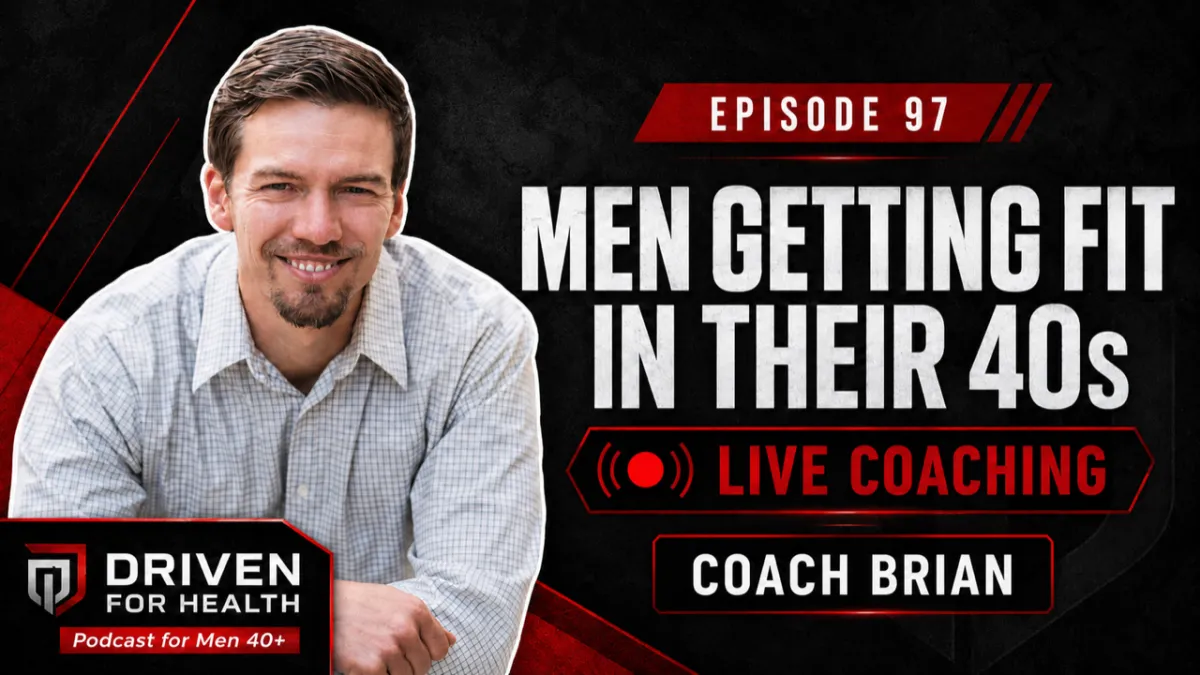
Fat loss after 40 runs on a short list of daily targets. Move a set amount, eat a set amount, drink your water and sleep seven hours or more. Coach Brian Parana coached that list live to his men's group on this one, one man at a time. Listen to Episode 97 for the whole session.
This is a live round table from The Call To Rise. Coach Brian is a coach and not a doctor. Nothing here is medical advice.
The Big Rocks Come Before Everything Else
Coach Brian names four things every man in the program has to hit.
- Movement, in whatever form you will keep doing.
- Food, built on three or four repeatable meals.
- Water at 100 ounces or more a day.
- Sleep at seven hours or more.
The fifth item is contact with him, and it is covered further down.
He teaches them in that order on purpose. A man who fine tunes his fiber before he settles his calories has fixed nothing. Sleep sits on the list because under six hours makes everything else harder. You are awake longer with more cortisol running and less time for your body to recover.
Move Enough and Count It Across the Week
Walk, run, ride, take the elliptical or the stepper, walk the dog or lift weights. Coach Brian does not care which one you pick. He cares that the movement adds up across the week and the month and the 100 days.
10,000 steps a day is a starting number rather than a law. Once you know your own math, 7,000 steps a day next to three workouts a week can carry a real deficit. Pick the number that holds on your calendar.
Intensity carries a cost. Walk for an hour, then run for an hour, and see which one leaves you hungrier. More intensity drives more hunger, and that hunger pushes against the deficit you are trying to hold. For a man whose main goal is fat loss, the lower gear is often the better trade.
More running also means more stretching and foam rolling. Skip that part and the bill arrives a couple of months later as aches and stiffness that keep you from running at all.
For a day that runs meeting to meeting from eight in the morning: take a call on a walk. Coach Brian tells men to change the culture around them rather than fight it. Put two workouts on the weekend and two inside the week so the early alarm never costs you sleep. Getting up under-slept to train is the pattern that quits first.
Build the Day on Three or Four Meals
Pick three meals, possibly four. Land the day under 2,000 calories and closer to 1,800. Divide it out and most meals sit near 500 to 600 calories.
Each meal holds three pieces. A protein. A fibrous carb. A starchy carb.
Then repeat them. Coach Brian wants three go-to breakfasts, three go-to lunches and three midday options that come out to the same calories and macros. They become interchangeable and the decision disappears.
A sandwich shows how plain it gets. Four to six ounces of a lean protein like roast beef. Two slices of bread at 80 to 120 calories each, or a lower calorie loaf closer to 60 a slice. A piece of fruit. A handful or two of vegetables. That plate lands under 500 calories and it can repeat for years.
Watch the wheat. It is easy to reach for and easy to overeat and it does not hold you long. A bagel at breakfast and a sandwich at lunch and pasta at dinner is a day of straight wheat, and both your energy and your waistline answer for it.
A whole bag of baby carrots is 170 calories and takes real chewing to get through. That is the food that keeps a man full inside his budget.
The Fiber Number Most Men Miss
The standard Coach Brian uses is 14 grams of fiber for every 1,000 calories you eat.
One avocado carries 16 grams of fiber. That is close to half a day for most men, and it is a place to spend the fat you have left.
Common fruit does the rest of the work. An apple or a banana or a pear runs about 100 calories with roughly 3 grams of fiber. Eat three of them and 300 calories buys you 9 grams.
Then there is the move Coach Brian uses on himself. Ground flax or chia seed stirs into yogurt, smoothies, cereal, muffins, pancakes or cottage cheese without changing the taste. That is 3 to 5 grams of fiber a day and some healthy fat with it. The chia gets stuck in your teeth once in a while. That is the whole downside.
Juicing Sends the Fiber to the Trash
A question came up on this call about juicing vegetables a man does not like and drinking them down to check the box.
Here is what a juicer does. It squeezes the liquid out and leaves the fiber sitting in the container. You drink the sugar and you throw away the part you were after. An apple gives you 100 calories and holds you a while. Apple juice gets you to 200 calories fast and holds you for nothing.
Blending keeps the fiber, so a blender beats a juicer every time. Coach Brian still would not build a habit on beet shakes. If a greens mix is what a man wants, he can throw it back with water and be done in ten seconds.
His own blended shake has a shape to it. 40 to 50 grams of a dairy based protein. A piece of fruit. Vegetables that survive a blender. Frozen broccoli and a couple of handfuls of spinach work well, and frozen blends smoother than raw. Carrots and red or yellow or orange peppers sweeten it. Kale takes over the whole glass. Peas move the flavor. Cucumber is poor and green pepper ruins it outright. Keep the finished shake at 500 calories or less.
Start With the Food You Already Like
Coach Brian's test for any new habit is one line: "what we do in two weeks, we do in two months, we do in two years."
That is why he will not hand a man a food he hates. Find the fibrous foods you already enjoy and build from there. The fiber worksheet he sends clients lists 50 of them, and there is a shake sheet that covers which vegetables blend well.
Andy is the proof that forcing it is the wrong road. He never ate vegetables. Coach Brian tried a few angles and let it go, because Andy was never going to keep it up. He took his fiber from fruit instead and lost 38 pounds. That story is Episode 53.
Another man Coach Brian works with eats ice cream every night. He makes his own, higher in protein and balanced against the rest of his day. He is losing weight and his diabetes is getting better while he does it. He learned the rules of the game and now he can travel and eat out and still land his number.
Tracking Is a Tool, Not the Point
Two men in this group got results on opposite methods.
Lucas came in 50 pounds overweight and lost 30 pounds in the 100 days. He works in finance and likes data, so a tracking app took quickly. His targets were 10,000 steps a day and 1,800 calories or less. He started cooking real recipes instead of ordering delivery, because bland food was going to end the whole thing. He was down another 3 pounds the week of this call and he is training for a marathon now.
Mike went the other way entirely. He never tracked a thing. He swapped his snack for a protein smoothie. He kept pizza nights with his kids. His knee was bad enough that a replacement was on the table, so he walked around 6,000 steps a day. He lost 30 pounds anyway. He took the least technical route Coach Brian has seen work.
Tracking is temporary either way. You learn what sits inside the food you eat most, and then you stop counting. Cheese and eggs are fat sources carrying a little protein with them, and beans are a carb with some protein and fiber. Once food reads that way, you can build a plate in any kitchen or any restaurant.
Why the Cravings Hit at Four O'Clock
A calorie deficit makes you hungry. That part is the deal you signed.
The rest is fixable. Carbs stacked at dinner leave the morning and afternoon empty, so move some to breakfast and spread them across the day. Plan a piece of fruit into the slot where the hunger lands. A hard candy or a mint or a cup of coffee covers the gap on a bad afternoon.
Medication changes the picture too. Coach Brian has coached a number of men who gained weight after starting a medication for something else. His answer is to hold the plan and add 100 or 200 calories to manage the side effect. Lose two pounds in the week instead of three and stay in the game.
Fueling a Long Run or Ride
Men in this group run and ride, so the fueling question comes up.
Load two days out rather than the night before. An extra 500 calories at dinner puts that day near 2,300 to 2,500. Eat normal the next day. Raise the calories on the day of the long effort itself. A big feed the night before is what leaves a man clawing at the cabinets two days later.
During the effort, carry food in your pocket. Coffee and oatmeal with honey handles a short morning. A honey bear off the grocery shelf holds 16 servings at 60 calories and 17 carbs each and does the same job as the packets built for endurance athletes. A caffeine tablet does the caffeine part on its own.
Men Are Allowed More Than One Emotion
One man joined this call while grieving a friend who had gone missing. He said he came on because he needed people around him. Coach Brian pointed him to Episode 73 with Andy Grant, where the two of them talked about what men are allowed to feel.
The picture they used was a piano. Human emotion runs the whole keyboard from low to high. Ask which key most men play and the answer is anger, because that is the one they were raised to reach for. For plenty of men the cover is still down over the rest of the keys.
Bottling the rest of it does not remove it. It stays in the room and it costs you. Coach Brian's position is plain. The full range belongs to you, sadness and tears included, and a man playing one note misses most of what his own life has in it.
The Habit That Predicts Who Finishes
Every man who has done well in this program has one thing in common. He stayed in contact.
Coach Brian puts it as plainly as it gets: "if you never even came to a Wednesday meeting and you just message me every day, you're going to have wild success." Report in at night with what you did. That is the whole ask.
The week has a shape around that check-in. A survey on Tuesday that tells him where you are. Two questions on Sunday about identity and the man you are becoming. A circuit workout on Saturday that runs around 20 minutes. Men who ignore the extras and hit the big rocks still do well. If he does not hear from a man for two or three days, he reaches out first.
Common Mistakes on This Call
Hacking a nutrient you hate. Blending vegetables you cannot stand is a habit with a two week shelf life.
Expecting it to click in week one. It takes most men two to three weeks to find the flow of the food and the tracking.
Loading carbs the night before instead of two days out. The hunger arrives 48 hours later and gets blamed on the wrong thing.
Paying a premium for fuel you can buy as food. Honey and a caffeine tablet do the same job as the packet.
Stacking every carb at dinner. The four o'clock hunger comes from the empty morning behind it.
Running more without stretching more. The cramps and the tight hips are the early notice.
Chasing every problem at once. Two or three changes a week is the pace that holds.
Who This Is For
This is for the man over 40 whose calendar starts at eight in the morning and never opens up. Other people's problems land on him all day. He hits three in the afternoon, looks at his step count and finds he has barely moved.
He does not need another system. He needs four targets he can hit on his worst week and one person who notices when he goes quiet.
Cross-episode links
- Episode 53: 38 lbs Lost in the 100 Day Challenge
- Episode 73: Real Men Feel, with Andy Grant
- Episode 107: Fat Loss Strategies From the Call To Rise Roundtable
- Episode 111: The Sleep Talk Every Man Over 40 Needs to Hear
- Episode 136: What Happens Inside a Real Coaching Call With My Clients
- Episode 137: He Ate Ice Cream Every Day and Lost Weight at 45
Call to Action
If you want a starting point with the food and the movement already mapped out, the free Lose 3 lbs in 3 Days plan runs three days. Get it at thecalltorise.com/lose3lbsin3days.
The Call To Rise is Coach Brian's 100 day program for driven men who want to lose 20 or more pounds and get their health up to the level their career is already at. What is included:
- An individualized meal plan
- An individualized training plan
- Weekly round table calls with the group
- 1:1 calls with Coach Brian
- A client site holding every resource in one place
The average man who works with Coach Brian for the full 100 days loses 20 or more pounds. The guarantee is one sentence. Lose 20 or more pounds in the 100 days, or Coach Brian keeps working with you until you do. Apply at thecalltorise.com.
Frequently Asked Questions
What are the big rocks for fat loss after 40?
Coach Brian holds men to four. Move a set amount in whatever form you will keep doing, eat three or four repeatable meals, drink 100 ounces of water or more, and sleep seven hours or more. The fifth is daily contact with your coach, which is the one that predicts who finishes.
How many calories should a man over 40 eat to lose fat?
Coach Brian starts most men under 2,000 calories a day and closer to 1,800. Divide that across three or four meals and each one lands near 500 to 600 calories. Lucas hit 1,800 calories or less with 10,000 steps a day and lost 30 pounds in the 100 days.
How many steps a day do you need to lose weight?
10,000 steps is a good starting number and not a requirement. Once you know your own numbers, 7,000 steps a day alongside three workouts a week can carry a real calorie deficit. One man in this group walked around 6,000 steps a day with a knee bad enough that a replacement was on the table and still lost weight.
Do you have to track macros to lose weight?
No. Two men in this group got results on opposite methods. Lucas works in finance and tracked everything in an app, and Mike never tracked a thing and swapped his snack for a protein smoothie instead. Tracking is a tool for learning what sits inside your regular food, and the intention is to stop counting once you know.
How much fiber do you need in a day?
The standard Coach Brian uses is 14 grams of fiber for every 1,000 calories you eat. One avocado carries 16 grams, which is close to half a day for most men. Three pieces of common fruit run about 100 calories each with roughly 3 grams of fiber, so 300 calories buys you 9 grams.
Is juicing vegetables good for fat loss?
No. A juicer squeezes out the liquid and leaves the fiber in the container, so you drink the sugar and throw away the part you wanted. An apple is 100 calories and holds you a while, and apple juice reaches 200 calories fast and holds you for nothing. Blending keeps the fiber, so a blender is the better tool.
How do you get more fiber if you do not like vegetables?
Start with the fibrous foods you already enjoy rather than forcing down the ones you hate. Stir ground flax or chia seed into yogurt, smoothies, cereal, pancakes or cottage cheese for 3 to 5 grams a day you will not taste. Andy never ate vegetables at all, took his fiber from fruit and lost 38 pounds.
Why do cravings hit in the afternoon on a calorie deficit?
Some of it is the deficit itself, which makes you hungry by design. The rest is usually carbs stacked at dinner and a breakfast with almost none, so spread them across the day and plan a piece of fruit into the slot where the hunger lands. If a new medication is driving it, Coach Brian holds the plan and adds 100 or 200 calories to manage the side effect.