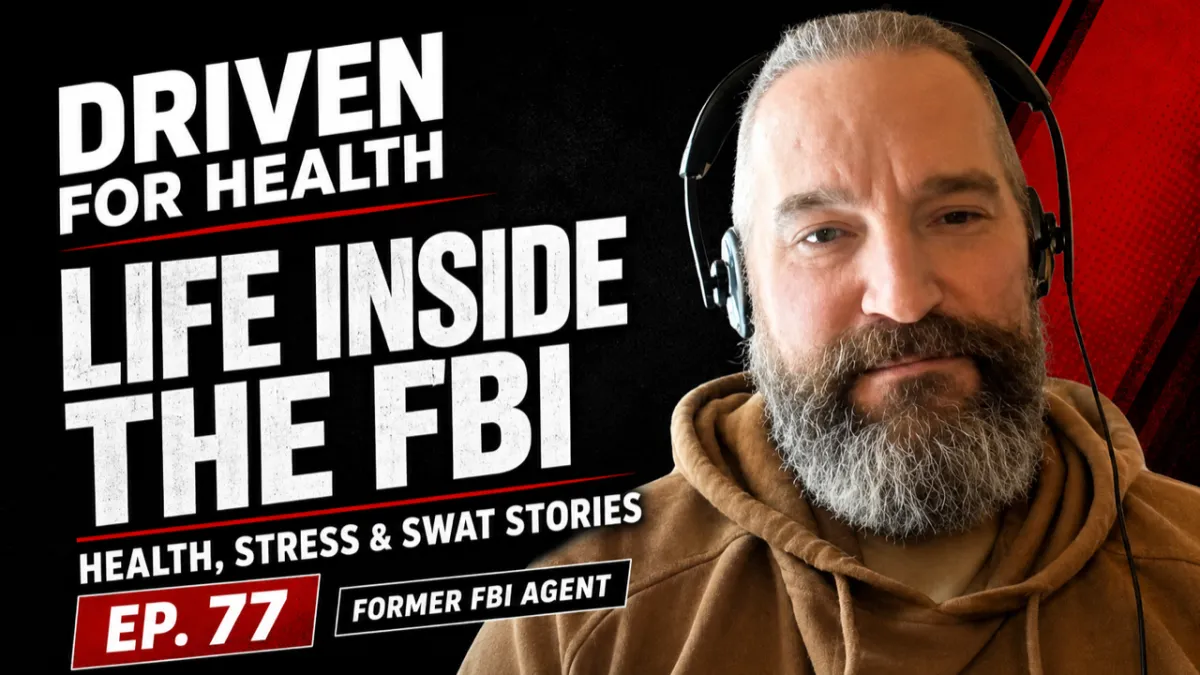
About 30 Percent Pass the FBI Fitness Test. Here Is Why
Seven out of ten FBI applicants fail a fitness test whose requirements sit online for anyone to read. Retired agent Eric Robinson watched that hold true for years while he tested people in Chicago. What separated the ones who made it had nothing to do with athletic talent.
Eric Robinson spent 24 years in the FBI, and part of that time went to proctoring the fitness test applicants take before they get a badge. The marks are published online in advance. About 30 percent of the people who walk in pass.
The Test Is Public and Most People Still Fail It
Eric Robinson worked cases as a field agent for 24 years. Alongside that he took an ancillary job as a fit instructor, which meant testing the applicants who wanted in. He ran those tests in Chicago during a heavy recruiting stretch.
Nothing about the test is hidden. As he put it, "the marks you have to hit, the form you need to carry out is all online and people know what they've got to do."
He put the pass rate at about 30 percent. He also put a ceiling on what passing meant, calling it a minimum-level result. His read on the people who did not make it was one line: "they're showing up not ready."
Brian pushed on that, because the bar itself is not exotic. Pushups, situps and a timed run. This is not a Navy SEAL tryout. It is the entry gate, and seven out of ten people fail it with the answer key in hand.
He Started Running to Stop the Headaches
Before the Bureau, Eric Robinson was a Baptist pastor. He built a church aimed at people who felt like outcasts, and those people brought heavy problems with them. One man's son was an addict. One woman's husband was leaving. One family could not afford groceries.
He could not put any of it down. He had stress-related headaches every day for about two years. He saw doctors and took every ibuprofen-related medication he could find. One doctor told him the cause was stress and asked whether he had considered being less stressed.
Running was the only thing that moved the pain. A few miles bought a short window. Eight miles bought about an hour and a half. He kept adding distance until the training turned into something else. His first marathon came in 1997. He qualified for Boston and ran it in 2000.
Back problems ended his running years later. He lifts weights now and works a punching bag. The mechanism has not changed for him: "there's a freedom in feeling like I've released something here."
He is direct about why it matters. "The mind's a very dangerous place," he said, and running got him out of it.
Brian named the alternatives men reach for when the pressure climbs. Money, sex and alcohol are all available tonight. Each one takes a man further down the wrong road.
Two Applicants and One Difference
Eric watched two people go opposite directions, and the difference was not talent.
The first was a young woman in Chicago who had already failed the fit test once. She had about 30 days to fix it before her next attempt. Sitting a wiretap with her, Eric pointed out that pushups need nothing but a floor and that they had a lull right then. She told him she did her workouts later. She never became an agent.
The second was a Border Patrol officer working a task force with the FBI. He was tall and heavy and he failed his test badly. Eric told him straight that he was too big to pass. The next time Eric saw him, he had dropped 75 pounds. He has been an agent ever since.
Eric read the gap as motivation and exposure. The Border Patrol officer already knew what federal work felt like and he wanted it. He also had something on the line: "he was sticking his neck out on line, possibly leaving another agency looking bad if he failed."
The young woman had a nice idea about a career. Nice ideas do not survive the first hard week.
The Real Fitness Test Is How Fast You Come Down
Eric was a breacher on the Cleveland SWAT team. The door was his job. "I've got to be able to swing a ram, swing a sledge and open doors," he said, "because if the door doesn't get open, we're unsuccessful in the mission." Operators run a SWAT fit test on top of the agent fit test.
He drew a hard line between the two groups. "The majority of FBI agents want to stay in shape. The totality of SWAT operators have to stay in shape."
In July of 2024 his team worked an operation on difficult terrain. The subject broke out a window and charged three operators with a bat. The team used deadly force. Eric wears a Garmin watch and went back to the data afterward. His heart rate hit 175 at the moment of the charge. While the team cleared the house it was back down to 85.
He and the operator next to him both guessed the whole encounter ran five minutes. "It was a minute and 17 seconds."
That is the number worth sitting with. A hard minute felt like five, and his body came off 175 fast enough to keep working. His stakes were plain: "if I'm not able to recover from that, then I got to tag out."
The same math runs your life at 45 with no bat involved. Stairs with a bag in each hand, or a kid who falls off a bike. What matters is not the peak. It is how long you stay there.
What the Bureau Confirmed About Handling Pressure
Eric said the Bureau confirmed more than it taught him, and three habits carried him through the career.
The first is letting go of what he cannot control. His squad would build a case and the federal prosecutor would charge six of the people they wanted. He would get angry and then drop it, because holding it changed nothing.
The second is talking it through. After the shooting his team leader paired each involved operator with another man for the day. The older practice was to take the weapon and set the operator off to the side alone for his own protection. Eric named that isolation as its own harm.
The third is curiosity before judgment. He worked victims, witnesses, informants and suspects the same way. One father thanked him for executing a search warrant on his own son. Eric kept bad cop in his pocket as an option and led with the other one: "the longer I can play good cop and show compassion to folks."
Brian runs the same play with clients. His version: "leave the other person in better spot than when I found them."
Connection Is Part of Staying Fit After 40
Brian built The Call To Rise around two problems at once. Men over 40 need to lose weight and eat better. They also need other men close enough to hear the hard stuff.
Eric's closest relationships came off the SWAT team. "When you have guys next to you that you know are set to put their life for yours, it makes a difference."
Most men over 40 have no version of that. Nobody to vent to and nowhere to put the pressure. So it stays inside and the body absorbs it.
What to Do This Week
- Give your biggest stressor a physical outlet. Lift, hit a bag, or walk it off.
- Time your recovery. After a hard set, count how long your heart rate takes to settle.
- Write your own standard down. Eric had a test with published marks, and you can set one that is equally clear.
- Pick one man to call this week. Not for advice. To say the thing out loud.
- Train so you can train again tomorrow. Wrecking yourself for three days is not progress.
Where to Start
Lose 3 lbs in 3 Days is a free three-day reset for men who need a starting point. You eat protein-first meals, hit your water target, and add steps above your normal count. No calorie counting and no extra workouts. Get it at thecalltorise.com/lose3lbsin3days.
The Call To Rise is a 100-day fat loss challenge for driven men over 40. It runs on strength training, individualized nutrition and real accountability. Most men lose 20 plus pounds. The guarantee is plain. Lose 20 plus pounds in the 100 days, or Brian keeps working with you until you do. Learn more at www.thecalltorise.com.
Frequently Asked Questions
What is the FBI fitness test pass rate?
Eric Robinson proctored applicant fit tests in Chicago and put the pass rate at about 30 percent. He added that passing often meant hitting the minimum and squeaking by.
Why do FBI applicants fail a test they can prepare for?
The marks and the required form are posted online ahead of time. Eric Robinson said applicants arrive without having done the work anyway, which is what made the pass rate an eye-opener for him.
How did running help Eric Robinson handle stress?
He had stress-related headaches every day for about two years while he was a Baptist pastor. Running was the only thing that eased them, and longer runs bought him longer relief.
What does heart rate say about whether a man is fit?
Eric Robinson's heart rate hit 175 when a subject charged his SWAT team with a bat. It was down to 85 while the team cleared the house. How fast you come down matters more than the peak.
How much weight did the Border Patrol officer lose to become an FBI agent?
He dropped 75 pounds after Eric Robinson told him he was too big to pass the fit test. He has been an FBI agent ever since.
How do you handle stress without turning to alcohol or food?
Brian names money, sex and alcohol as the outlets men reach for first. Eric Robinson used running for years, then moved to weights and a punching bag once his back stopped him running.
Why does connection matter for men over 40 who want to get in shape?
Eric Robinson said the men on his SWAT team were the closest people to him. Brian built The Call To Rise around a group of men for the same reason, because a man with nobody to talk to has nowhere to put the pressure.
What is The Call To Rise?
The Call To Rise is a 100-day fat loss challenge for driven men over 40. It runs on strength training, individualized nutrition and real accountability. Most men lose 20 plus pounds.