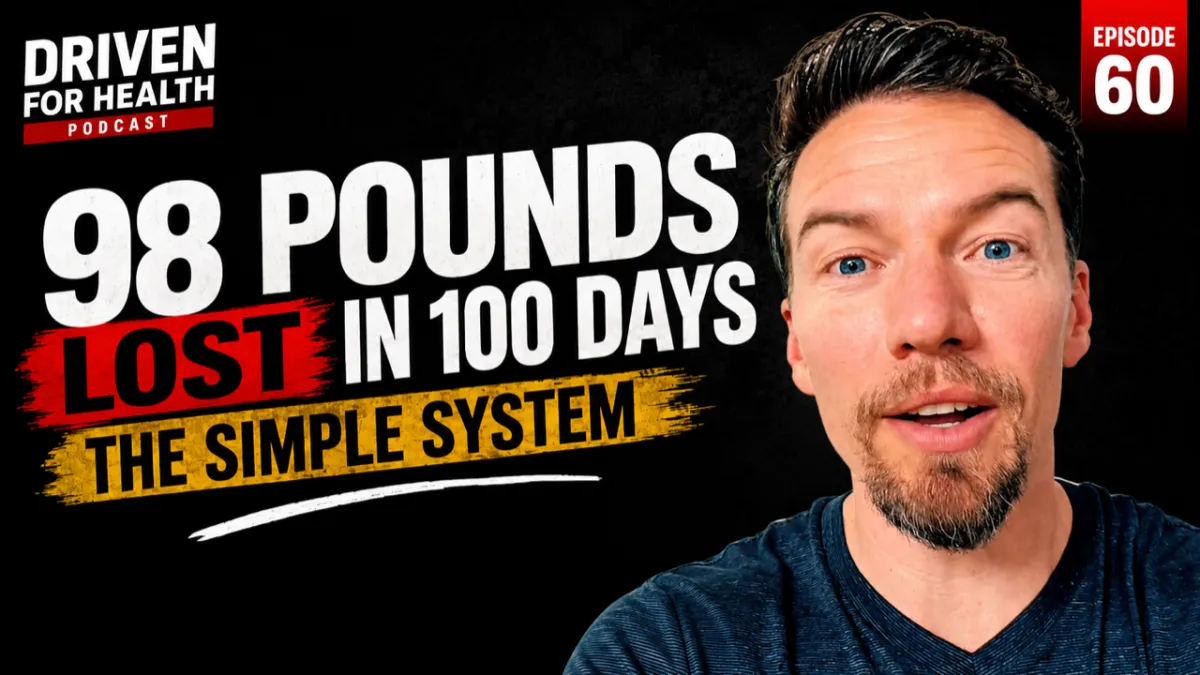
From 340 Pounds to a Plan That Worked on His Worst Weeks
One of the men in this episode started around 340 pounds. Another was 25 years old with high cholesterol and a desk job eating 50 to 60 hours of his week. Coach Brian breaks down the plan each of them followed for 100 days and the five parts of it that held on their worst weeks.
Fat loss is simple on paper. It gets hard when work ramps up and travel hits and dinner becomes a decision a man makes when he is already tired. This episode is a behind-the-scenes look at what men inside a 100-day challenge did to keep making progress on the weeks that went badly.
Different Lives, the Same Breaking Point
Every man in this episode hit the same moment. He looked at where his health was headed and decided he could not keep going that way.
One of the men started around 340 pounds. He had carried that weight for years and he was tired of feeling stuck. He needed something he could run on a stressful week and not only on a good one.
Another was 25 years old and working 50 to 60 hours a week at a desk. He had moved to a new city and lost his routine along with his people. His weight climbed for two years. Then a doctor told him his cholesterol was high. At 25.
Another man traveled for work and ate fast food most weeks. His blood sugar was climbing and diabetes was becoming a real concern. He wanted to keep up with his kids instead of watching them from the sidelines.
Where Each Man Landed After 100 Days
The man who started around 340 pounds came down to 310. That is about 30 pounds gone.
The man at the desk started at 236 and finished at 205.7. About 30 pounds again.
The man who traveled started around 212 and finished at 174. That is 38 pounds.
None of it came out of a punishing gym program. It came out of structure and repetition on ordinary weeks.
The Decision Comes Before the Plan
Identity is how a man sees himself. It is the story he believes about who he is, and it shows in how he lives.
When a man's habits stop matching who he believes he is, he feels it. He might never say it out loud. That gap is where a lot of men sit for years.
The first move is deciding to stop putting it off. A man decides who he is going to be from here, then starts acting like that man.
One of the men had been telling himself his life would open up once he reached a certain weight. His decision was to be done waiting. Not next month. Not after the holidays. Not after work calmed down. He wanted his life to feel better, not only look better.
Another decided early. He looked around his office and saw what happens to men who let years pass. He was not going to wait until 45 to fix it. He picked his own future instead of letting his job pick it for him.
The third took responsibility before a bigger problem forced his hand. He wanted to be present and capable in his 40s and 50s, and he was done pretending a rising blood sugar was fine.
None of these men signed up for a summer body. They signed up because their health was moving the wrong way and they knew it.
A Movement Standard That Survives a Real Schedule
Most men think fitness has to mean long gym sessions and a perfect training split. That is not how a busy man wins.
The training side of this program is built around a minimum effective dose. Daily movement. Simple strength work. Standards that hold through travel and stress and family life.
One of the men built his results around daily movement instead of the gym. He did some gym work at times. The plan never depended on him feeling fired up to train, and that matters more than most men expect.
Another leaned into steps and running. He joined a run club and got far more than cardio out of it. It gave him routine. It gave him people who live differently. That changes what a man chooses on a Friday night.
The man who traveled is the clearest example here. He committed to 10,000 steps a day as a minimum and turned it into a streak. On day 89 he said out loud that he was going to hit a million steps inside the 100 days. A streak takes the daily argument off the table.
Busy men do not need complicated workouts. They need a movement standard that holds up on a bad week.
Nutrition That Repeats Instead of Resetting
Nutrition here is not a meal plan a man hates. It is a repeatable way to eat that fits the schedule he already has.
Most men think they need the perfect plan. What they need is a framework they can run again next week without thinking hard about it.
One of the men had the pattern most busy men recognize. Long day. Hunger hits. Impulse food. Snacks and drive-thrus. Two tools fixed it. He learned to stop eating at about 80 percent full, which cut the overeating without tracking every bite. Then he made smoothies his default whenever hunger hit. Fruit and vegetables. Fast and easy. It kept him out of the snack spiral, and he stayed in a calorie deficit without feeling miserable.
Another man does well with numbers, so tracking suited him. He ran around 1,800 calories a day with strong protein and balanced meals. A man can hit a calorie target and still feel hungry if his meals are built poorly, so we rebuilt his meals to keep him full and support his running. He also had to learn how to handle burgers and beers and weekends. He did not need to avoid his own life. He needed a plan for it.
The man who traveled had one big leak. It was fast food and the way he ate it. He was hitting fast food three to four times a week. Some of those meals ran 2,000 calories on their own, and then he ate dinner later. That adds up faster than most men want to admit.
We tightened portions. We kept meals regular. We kept calories in check most days. Overseas he kept it basic with protein and simple carbs and bottled water. At home he ran the same approach.
He also does not like vegetables. We worked on it and we did not force him into a life he was never going to keep. He used fruit daily for fiber and consistency. A result a man can hold beats a temporary personality change.
Structure for the Weeks That Go Wrong
Mindset here means the set of beliefs that shapes how a man reads his week and how he answers it.
A man who believes he always falls off acts like it. A man who believes he has a plan for busy weeks acts like that instead. This is where coaching earns its keep, because tactics do nothing if a man's head is wrong and his week has no shape.
One of the men had years of frustration tied to the scale. His win was learning to stay steady. He stopped treating one bad day as a failure. He learned to reset and keep going, which is how momentum stays alive.
Another learned that motivation fades. His old pattern was two hard weeks of extreme dieting and then a rebound. So we built structure around him. Steps. Calories. Balanced meals. Better sleep. He also put his screens away before bed. Sleep affects hunger and cravings and recovery and decision-making. His sleep improved and his days got easier, and his results kept moving.
The man who traveled believed he did not have time for a program. Then he learned what every busy man has to learn. Time is not the problem. Priorities and structure are. He followed the plan on the road. He stayed in daily contact. He made the small decisions over and over.
Why Men Do Better With Other Men Around Them
Most men try to fix their health alone. They do not talk about it and they do not ask for help. They carry it.
Isolation wears a man down slowly. A real group gives him a place to be seen and supported. It gives him other men who understand what he is doing. It puts standards around him instead of only in his head, and it builds trust through shared effort.
One of the men said the weekly call was the most valuable part of the whole thing. He liked having real questions to think through, and he liked direct check-ins that kept him from disappearing.
Another got it from coaching plus a new community. His run club gave him people who move and take care of themselves. That raised his own standard without anyone lecturing him.
The man who traveled set the example instead. His steps streak pulled other men along with him. One man's consistency raises the bar for everybody around him.
A man's environment shapes his choices. His choices shape his results.
The Pattern Underneath Every Result
Zoom out and this gets simple.
One man needed structure and accountability. He built consistency with portion awareness and a default food he could reach for.
One needed structure and a clear reason. He built consistency through tracking, steps, sleep, and a stronger social circle.
One needed a plan that worked around travel and a packed calendar. He built consistency through daily steps, portion control, and coaching for the gray areas.
Different men. Same system. Here is the shared foundation.
- A clear reason to change.
- A daily movement standard.
- A repeatable nutrition framework.
- Structure for the hard days.
- Support that keeps the plan alive.
The framework these men ran gets a full breakdown in Episode 15 if you want the teaching version.
Who This Episode Is For
This is for the man who is busy and knows he needs a better system. He is not starting from zero in life. He has responsibilities. He is leading a family and performing at work. He has run out of room to ignore his health.
A lot of men come in because their blood work is heading the wrong way. Cholesterol. Blood pressure. A1C. Blood sugar. The work cuts body fat and builds habits that improve health markers at the same time.
He does not need another app or a new supplement stack. He needs a plan that works on his hardest weeks, not his easiest ones.
Your Next Step
If you want to test a plan before you commit to anything bigger, start with the free Lose 3 lbs in 3 Days guide at thecalltorise.com/lose3lbsin3days. It is a short reset built for a man with a full calendar.
If you are ready for the full 100 days, read about the program and fill out the application at thecalltorise.com. If it is a fit, Coach Brian will map out what your next 100 days should look like.
The Call To Rise is a 100-day Fat Loss Challenge designed for driven men ready to get back to a healthy body, boost their energy, and lead as a powerful man.
If you are struggling with some form of chronic illness such as high blood pressure, cholesterol or even Type 2 Diabetes - this program is designed for you too.
Through a proven system of strength training, personalized nutrition, and real accountability, most men lose 20 plus pounds and rebuild the confidence that comes with it and even improve chronic illness issues. It's more than a fitness program, it's a body transformation experience with a Brotherhood of like-minded men committed to showing up, leveling up, and leading in a body they are excited about.
This is your wake-up call to rise.
www.thecalltorise.com
Frequently Asked Questions
What system did these men use to lose fat in 100 days?
They all ran the same five-part system. A clear reason to change, a daily movement standard, a repeatable way to eat, structure for the hard days, and support that keeps the plan alive.
How much weight do men lose in the Call To Rise program?
Most men lose 20 plus pounds in the 100 days. The program runs on strength training, personalized nutrition, and real accountability.
Do you need long gym sessions to lose fat after 40?
No. The training side is built around a minimum effective dose of daily movement and simple strength work. The standard has to hold through travel and stress and family life.
How many steps a day should a busy man walk?
Coach Brian uses 10,000 steps a day as a simple target because it works. One of the men turned that daily minimum into a streak and stopped debating it with himself every morning.
How do you eat well when you travel for work every week?
Keep it basic. Protein, simple carbs, and bottled water are available almost anywhere. One of the men had been eating fast food three to four times a week, and tighter portions with regular meals fixed most of it.
What do you do when a busy week wrecks the plan?
You reset and keep going instead of treating one bad day as a failure. Structure carries a man when motivation fades. Steps, calories, balanced meals, and better sleep are the pieces that hold a hard week together.
Why does a group of other men matter for fat loss?
Most men try to fix their health alone and carry it without asking for help. A real group puts standards around a man instead of only in his head, and it gives him other men who understand what he is doing.
Who is the Call To Rise 100-day challenge for?
Busy men who are leading at work and at home while their health heads the wrong way. Men who have tried fasting or cutting carbs and stalled. Men who need a plan that works on a hard week.