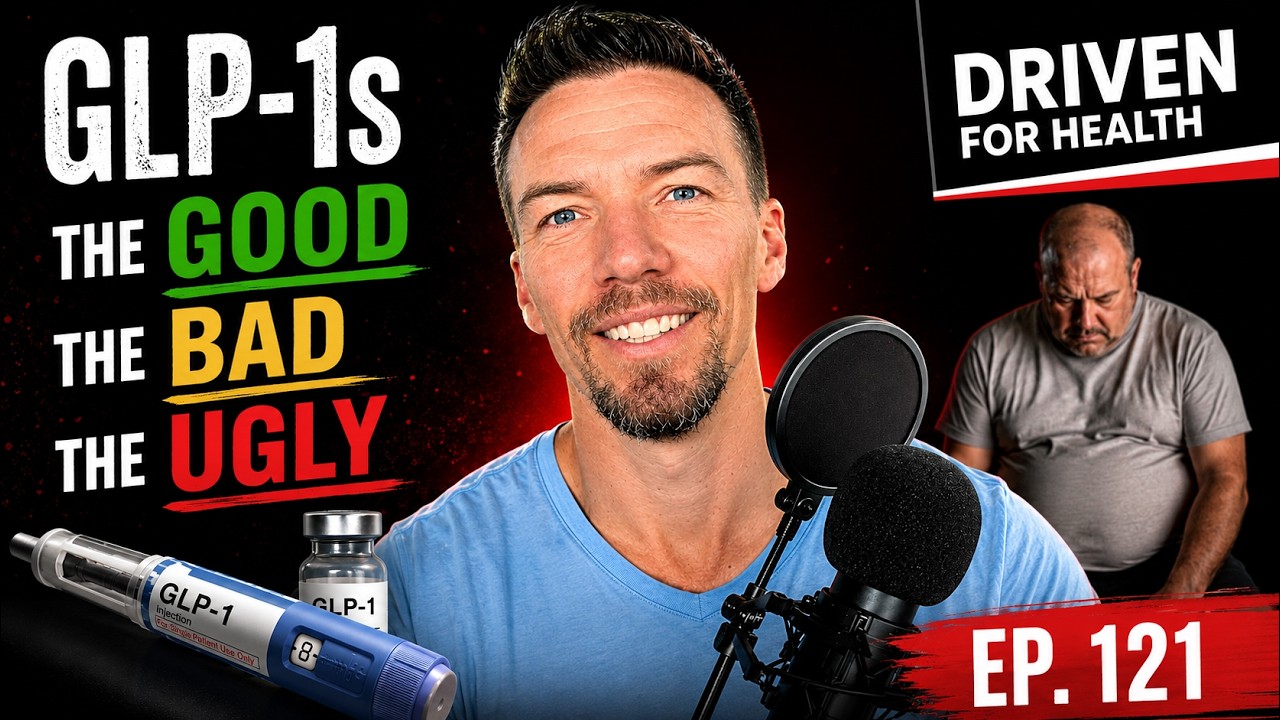
GLP-1 Weight Loss Drugs: The Real Trial Numbers Explained
One in eight adults in the United States is on a GLP-1 drug right now. Coach Brian Parana breaks down the real clinical trial numbers behind Ozempic, Wegovy, Mounjaro and Zepbound on episode 121 of Driven For Health. No hype and no fear, just the research.
The Good: What The Trials Actually Show
The STEP 1 trial on semaglutide found 14.9 percent average weight loss compared to 2.4 percent on placebo at 68 weeks. In that same trial, 86.4 percent of people lost at least 5 percent of their body weight.
Tirzepatide performed even higher in the SURMOUNT-1 trial, with weight loss up to 22.5 percent on average and 52 pounds lost at the 15 mg dose. The newer SURMOUNT-5 trial found tirzepatide beat semaglutide directly: 20.2 percent loss versus 13.7 percent at 72 weeks.
The SELECT trial found a 20 percent reduction in major heart events for adults with heart disease who did not have diabetes. The FLOW trial found a 24 percent reduction in kidney problems, an 18 percent drop in cardiovascular events and a 20 percent lower risk of death from any cause.
The Bad: What Nobody Warns You About
Weight loss on a GLP-1 is not only fat. A meta-analysis in the Obesity journal found that lean mass made up 30.8 percent of the weight lost on average, with a wider range of 20 to 40 percent depending on the study.
Stopping the drug comes with a real cost too. The STEP 1 extension study found people regained two-thirds of the weight they lost within a year of stopping.
Side effects are common. Ozempic trial data shows 48 percent of people report some side effect and 37 percent report nausea. Cost is a real barrier as well: a late 2025 KFF survey found 56 percent of people say the drugs are hard to afford, 27 percent pay full price even with insurance and 14 percent quit because of cost.
The Ugly: The Real Risks To Know
The FDA has logged more than 1,700 adverse events tied to compounded and counterfeit GLP-1 drugs as of May 2026. Agents seized a batch of counterfeit Ozempic in December 2025.
A 2026 consensus statement from eye specialist groups linked GLP-1 use to a vision risk called NAION. Surgery guidance changed too, with updated multi-society rules on stopping the drug before anesthesia.
Some warnings turned out to be less certain. The FDA requested a suicidality warning removed from GLP-1 labels in January 2026 after finding no increased risk. A thyroid warning on the label is based on a rodent-only finding, with no confirmed human cases so far.
What This Means For You
Coach Brian's take: if you are on a GLP-1, protect your muscle. Lift weights and eat enough protein so the weight you lose comes from fat and not from the muscle you need to stay strong and independent.
A new drug called orforglipron got FDA approval on April 1, 2026. It adds a pill option to the current list of injections. Right now, 12.4 percent of adults in the US use a GLP-1 for weight loss.
Listen to Episode 121 of Driven For Health for Coach Brian's full breakdown, including the story of where these drugs actually came from and what he tells his own clients who are on one.
Frequently Asked Questions
How much weight do people lose on semaglutide?
The STEP 1 trial found 14.9 percent average weight loss at 68 weeks. About 86.4 percent of people lost at least 5 percent of their body weight.
Does tirzepatide work better than semaglutide?
The SURMOUNT-5 trial found tirzepatide beat semaglutide directly. Weight loss came in at 20.2 percent versus 13.7 percent at 72 weeks.
Do GLP-1 drugs cause muscle loss?
Yes. An Obesity journal meta-analysis found lean mass made up 30.8 percent of the weight lost on average, with a range of 20 to 40 percent across studies.
What happens if you stop taking a GLP-1?
The STEP 1 extension study found people regained two-thirds of their lost weight within a year of stopping.
Are counterfeit GLP-1 drugs a real risk?
Yes. The FDA has logged more than 1,700 adverse events tied to compounded and counterfeit versions as of May 2026. Agents seized counterfeit Ozempic in December 2025.
What side effects are most common with GLP-1 drugs?
Trial data shows 48 percent of people report a side effect and 37 percent report nausea, most often while the dose goes up.
How much do GLP-1 drugs cost?
A late 2025 KFF survey found 56 percent of users say the cost is hard to afford, 27 percent pay full price even with insurance, and 14 percent quit because of cost.
Do GLP-1 drugs help with heart or kidney health?
The SELECT trial found a 20 percent drop in major heart events for adults with heart disease. The FLOW trial found a 24 percent drop in kidney problems and a 20 percent lower risk of death from any cause in people with type 2 diabetes and kidney disease.
Get Help Building The Habits
The Call To Rise is a 100-day fat loss program for driven men who want to lose weight the right way, with or without a GLP-1. You get strength training, personalized nutrition and real accountability from a coach who checks in. Most men drop 20 plus pounds and rebuild the muscle and confidence that comes with it.
Learn more and apply at The Call To Rise.
Read the companion breakdown on the podcast site: GLP-1s: The Good, the Bad and the Ugly.