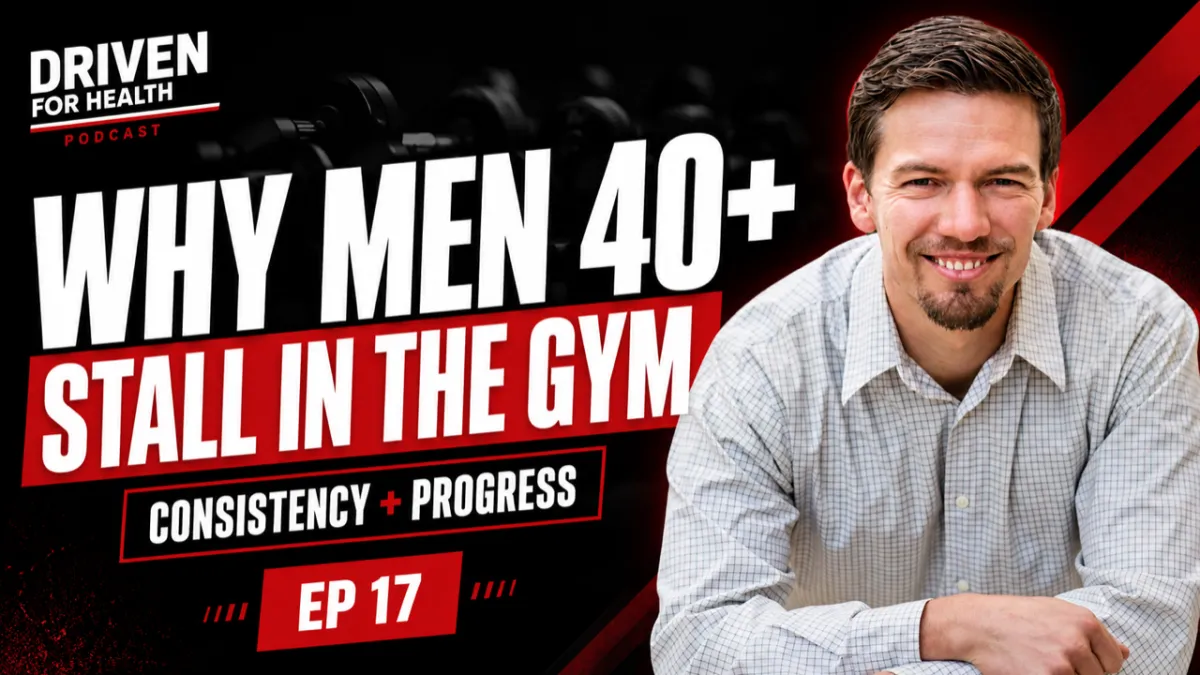
The Real Reason You Can't Stay Consistent With Training After 40
You know what to do. You have tried more than one program. The problem is not your discipline. The plan never fit your actual life. That is the first thing Coach Brian fixes in the Muscle and Strength Training Pyramid.
Why Adherence Comes Before Everything Else in Training
Coach Brian built the Muscle and Strength Training Pyramid to end the confusion around workout splits, rep ranges, and rest times. Those pieces matter, but they come after the ones that build the base. Picture a cart pushed in front of a horse. Nothing moves forward that way. The pyramid stacks six levels from the base up. The bottom three are adherence, volume-intensity-frequency, and progression. The top three are exercise selection, rest periods, and tempo. Each level supports the one above it. A weak base makes the whole system struggle. That is why adherence sits at the bottom. The best program in the world does nothing for you if you cannot follow it.
The REF Method: Three Questions That Decide If You Stick With a Plan
Adherence means sticking with your plan long enough to see progress. Coach Brian uses the acronym REF to make it simple: realistic, enjoyable, and flexible. These three factors decide whether your training holds up for months.
Realistic: Match Training to the Life You Have
Ask yourself if your plan fits your real schedule. A busy parent who works long hours or travels often will struggle with six workouts a week. Training three or four times a week and staying consistent beats a six-day plan you quit after three weeks. Match your training to the schedule you have. A realistic plan lets you recover properly too.
Enjoyable: Pick Training You Will Keep Doing
You stay committed longer when you enjoy the process. You do not need to love every session, but you should find some satisfaction in it. Dreading every workout makes it harder to keep going. Choose movements, gyms, or training partners that keep you engaged. A plan that excites you pulls more effort out of you, and more effort brings better results.
Flexible: Build a Plan That Bends When Life Does
Work schedules shift. Travel comes up. Family takes time. A training plan that is too rigid breaks the moment life gets busy. A flexible plan lets you adjust without losing progress. You can train at different times, swap exercises, or shorten a session when the day demands it. This keeps you consistent through stressful stretches instead of burning out. Research backs this up. One study found that people who adjusted their workouts based on daily energy levels gained more strength than people who followed a fixed plan. Another study found that outside stress can reduce your training results. Flexibility helps you manage both your schedule and your recovery.
Terry's Comeback: What Adherence Looks Like in Real Life
Terry joined Coach Brian's Call To Rise 100-day Fat Loss Challenge after years away from the weights. He felt tired every morning, stiff, and stuck in a body that felt decades older than he was. The program's Mission Brief workouts brought real changes within a few weeks: more strength, better energy, and a plan he looked forward to. The workouts fit his schedule, and the plan removed the guesswork. Terry called himself stronger than he had been in a decade. That is adherence working as intended, a plan built around his real life instead of an ideal one.
Common Mistakes Men Over 40 Make With Consistency
Starting too hard is the most common mistake. Many men come back to training after a break and try to train the way they did in their twenties. The body is not ready for that load. Soreness and injury follow. They stop and feel defeated. Starting with something manageable and building up is faster than starting big and getting hurt.
Treating missed sessions as failure is the second mistake. Missing a workout is not failure. Quitting is failure. A flexible mindset means a missed Tuesday becomes a Thursday. The plan continues.
Choosing programs that do not fit their life is the third mistake. A program built for a 22-year-old college student with unlimited time is not the right choice for a man running a company and raising a family. Match the program to the life you have now.
Waiting to feel motivated is the fourth mistake. Motivation follows action. If you wait to feel ready, the session never happens. Consistency builds the momentum that makes training feel like part of who you are.
Who This Approach Is For
This works for men who have tried and failed at multiple programs, not because they lack discipline, but because the programs were built for a different life. If you are over 40 and busy and willing to commit to a plan that fits your real schedule, adherence-first training gives you a foundation that holds.
Before You Chase Sets and Reps
Adherence is the foundation everything else stands on. Sets, reps, and supplements can wait. First ask if your plan is realistic, enjoyable, and flexible for the life you live now. Get that right, and every other layer of the pyramid has something solid to build on.
Listen to Episode 17 on Driven For Health for the full breakdown.
Read the companion post on Driven For Health: Why Men Over 40 Struggle to Stay Consistent in the Gym.
If you want to know where your health stands right now, download the free Blood Panels Scorecard. It shows you what to look for in your labs and what the numbers mean for your energy, testosterone, and fat loss. Get it at brianparana.com.
When you are ready for a structured program with daily accountability, The Call To Rise is a 100-day challenge for men over 40 who want to lose 20 or more pounds and build a body that holds up. Twelve men have finished it and averaged 25 or more pounds lost. The guarantee: lose 20 or more pounds in 100 days, or Brian keeps working with you until you do. Apply at thecalltorise.com.
Common Questions From This Episode
Why do men over 40 struggle to stay consistent in the gym?
The most common reason is that the program does not fit their real life. A plan built for a younger man with fewer responsibilities breaks down under work travel, family commitments, and limited recovery time. Consistency follows when the plan fits the life.
What is the REF method for training consistency?
REF stands for Realistic, Enjoyable, and Flexible. Realistic means the plan fits your real schedule. Enjoyable means you find something in the process that keeps you coming back. Flexible means the plan can adapt when life changes, without falling apart entirely.
How many days per week should a man over 40 train?
Three to four focused sessions per week is often the most sustainable starting point for busy men over 40. That frequency allows enough stimulus for strength and muscle while leaving room for recovery and real life. Consistency over months matters more than cramming in more sessions per week.
What is the Muscle and Strength Training Pyramid?
The Muscle and Strength Training Pyramid is a framework for organizing training decisions in the right order. It starts with Adherence at the base, then moves up through Volume, Intensity and Frequency, Progression, Exercise Selection, Rest Periods, and Tempo. Each level supports the one above it. Getting the base right makes everything above it more effective.
Is it too late to build muscle and strength after 40?
No. Men in their 40s, 50s, and 60s build muscle and get stronger when they train with a smart, consistent plan. The key is matching the program to the body you have now. Recovery takes longer, intensity needs to be managed, and the fundamentals matter more than ever.
How do you build a training habit that sticks long term?
Start with something you can do, not the most advanced or intense option available. Find movements and a training environment you like. Build flexibility into the plan so a missed session does not derail the whole week. Motivation follows consistency.
What should a man over 40 focus on first when getting back into training?
Adherence. You need a plan you can follow week after week before worrying about rep ranges or exercise selection or training splits. Starting with something manageable and building up over time produces better results than starting at full intensity and burning out in three weeks.
What is The Call To Rise and how does it help men build consistency?
The Call To Rise is a 100-day program for men over 40 who want to lose 20 or more pounds and build a training habit that lasts. It includes an individualized training plan, weekly group calls, and 1:1 sessions with Coach Brian. Twelve men have completed the full 100 days and averaged 25 or more pounds lost. The guarantee is clear: lose 20 or more pounds in 100 days, or Brian keeps working with you until you do.