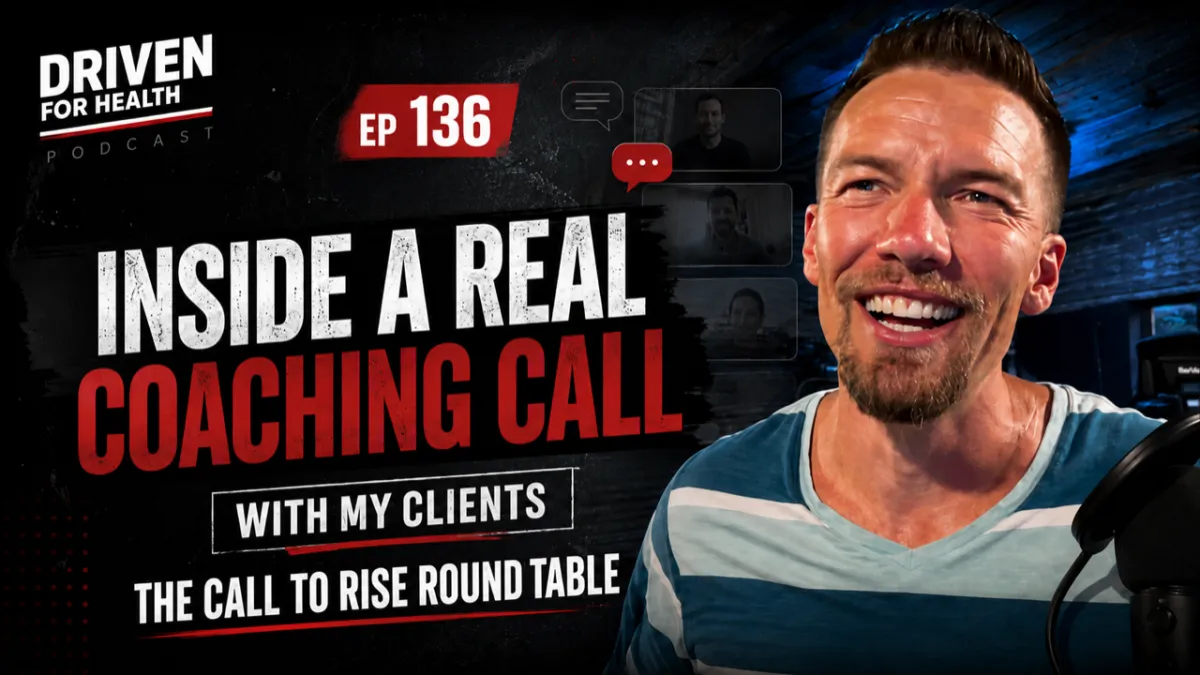
What A Real Fat Loss Coaching Call Looks Like For Busy Men
Most men have never heard what a real coaching call sounds like. Coach Brian Parana recorded one and put it out whole. Six men and one hour of live answers on travel weight, step counts, and bean labels.
A Call To Rise round table opens with wins from every man on the call. Coach Brian then teaches one idea for the week, and the rest of the hour goes to live problem solving. Episode 136 is a full recording of one of those calls with six men on it. Listen to Episode 136 for the whole hour.
The Call Opens With Wins
The July round table opened with a question that has nothing to do with health, then moved to wins. Coach Brian's own was the marathon his oldest son challenged him to run. He has 300 miles on the year and 7,000 minutes on the bike since February, held in zone 2 so he builds his VO2 max without getting hurt.
Eight Days Away and the Same Number on the Scale
Joe has been in the program about 13 weeks. He went home to Tennessee for eight days over the Fourth of July to see family.
Travel is the first thing Coach Brian asks a man about, because most men come home heavier than they left. Then he asks what you want out of the trip. Lose, maintain, or gain. Joe picked maintenance.
Joe weighed 210.4 pounds the morning before he left. He stepped on the scale a few days after he got back and read 210.4.
The Get Back On It Rule
Coach Brian has a rule he now calls the get back on it rule. However many days you are off is about however many days it takes to get back on.
The rule also sets when you weigh in. After an eight day trip he tells a man to wait five to eight days before touching a scale. Flying dries you out and leaves your body holding water, so the number the day you land tells you about the flight.
Why Do You Want To Get Healthier
The teaching block came out of a book Coach Brian had been reading, The Motive by Patrick Lencioni. He opened with one question. Why do you want to get healthier?
He splits the answer into two motives.
The first is reward. The scale moves. The doctor stops flagging cholesterol, blood pressure, and blood sugar. More energy. A leaner and stronger body. Old clothes in the closet that fit again. Getting off a medication you no longer need.
The second is responsibility. A wife or partner who deserves the version of you that lasts. Kids who need a father with something left in the tank at night. A career that runs on your energy. And you, as a man who keeps his word to himself.
He made that last one concrete. Every time you say you will do something and leave it undone, you chip away at your belief that you can follow through. The next hard thing gets easier to skip.
The answers around the table were plain. One man wants to keep up with his eight year old son on skis when the boy is twenty five. Another wants grandkids and a retirement that is ten to twelve years out. On episode 125 a client answered with a life well lived. On episode 133 an angel investor sorted his life into four buckets: work, civics, self, and health.
Two Heart Scares in the Room
Two of the men on the call had heart trouble in the past year. One woke up in atrial fibrillation and went to the hospital. The cardiologist ran every test available and found nothing wrong. He started making changes anyway. The other needed an ablation of the heart. He had been working out at the time and could not get the fat off. Coming out of surgery and seeing how upset his kids were is what moved him.
Coach Brian said the pattern is common. Almost nobody comes to him already healthy. Men reach out at their heaviest weight, in their largest clothes, and at the highest disease risk they have carried. The check engine light has been on for a while.
When the Results Stall
Coach Brian's next question was what you do when the reward stops arriving. He listed the moments that cause it. A vacation off script. A heavy work stretch. Travel. Getting sick.
Most people quit right there. The plan can still be working on a slower clock than they wanted.
He gave the Monday example. A man tells him he lost nothing this week, so Coach Brian has him weigh in on Friday too. The Friday number comes back two pounds down and Monday it is back. The plan worked Monday through Friday. The weekend undid it four weeks running.
One of the men answered from his own recovery. After heart surgery he could barely walk from the living room to the kitchen. He went a little further every day and it took a few weeks to get around the block. Coach Brian's line for that pace is inch by inch it's a cinch, mile by mile it'll take a while.
Another man said he has to move the needle every day, even a small amount. Doing nothing makes it too easy to excuse the bad habit that follows.
Is 10,000 Steps at Work Enough
One man on the call gets close to 10,000 steps at work and asked whether he should add another 10,000 on top of it.
Coach Brian works three levers. Movement, food choice, and portion control. He calls the math underneath them the Body Math Formula. Move plus eat equals what your body does.
His answer on the step count came in two parts. 10,000 a day is the minimum with or without a workout. Judge it as an average across a week or a month rather than one day at a time.
Then he told the story he had teased in the intro. Jay and Curtis both walked about 6,000 steps a day and both lifted five days a week. Curtis started at 225 pounds and lost close to 30 pounds eating 2,300 to 2,400 calories a day. Jay started at 207 and got down to 172 on about 1,700. Their movement matched and their calories sat 600 apart. Both men lost more than 25 pounds.
Should he add steps? If the time is there and it moves fat loss, do the work. If not, raise your heart rate instead or turn the strength work into circuits. The mission brief that goes out to the group every week has a 20 minute workout built for that.
Strength training sits apart from the step question. Two to three times a week is the target and it holds muscle as you age. If you have 30 to 50 pounds to lose, full body sessions beat a bro split because you burn more in the same hour.
The Tomorrow Test
Coach Brian tracks his own workouts on a board with the date and the initials of whoever trained with him. He trains with other people on purpose. With nobody around he gets on the bike and works at the same time.
He calls that pairing temptation bundling. Walk and take a meeting. Lift and watch a movie with your kid.
He does not track weight on the bar. He tracks reps and sets at a load he will not get hurt on, because of the question he asks himself first. Can I work out tomorrow? He calls it the tomorrow test. An injury takes away more than a hard session gives you.
What He Did With a Bean Label
One man had swapped his baked beans for a zero sugar version. Coach Brian had him hold both cans up to the camera and read them line by line.
Serving size on both was half a cup. The zero sugar can came in 30 calories lower. Fat was half a gram against one gram, which is nothing. Protein matched, because both cans are beans. The carbohydrate gap traced back to sugar. The regular can had 12 grams of sugar with 11 of them added. The zero sugar can had none.
The surprise was fiber. The zero sugar version carried 12 grams per serving against 5 in the regular. Sucralose explains the sweetness and added soluble corn fiber explains the count. The other ingredients in that can are water and seasoning.
The point runs past this one brand. Beans and lentils give you protein, carbohydrate, and fiber in one food. Most men rarely eat them. Refried beans out of a can are not fried either. They are mashed beans.
Use What Is Already in the House
The rest of the call ran on one idea. Use what you already have and be resourceful with anything that makes it easier. One man had used ChatGPT to build a recipe list before his grocery run.
A man who is close to the end of his 100 days eats canned vegetables most of the time. Open a can, rinse, heat, plate. He never cooks them from scratch and it has worked the whole way.
Coach Brian eats leftovers most days, mostly on the carbohydrate side. Rice, potatoes, pasta, and beans sit pre-cooked in his fridge. Dry beans in an Instant Pot with two parts water to one part beans are done in 30 minutes.
Another man built his travel meals around a bowl with lettuce as the base, double protein, and vegetables. Protein shakes and bars covered the gaps. He texted Coach Brian through it and got answers back fast. The alternative was grabbing the quickest thing available and feeling terrible after.
The travel protocol he repeats is short. Protein, vegetables, and 30 carbs. Do not overeat. Drink plenty of water when you are sweating and moving.
The AIM Principle
Coach Brian closed with the framework he uses more than any other. AIM. Am I moving toward my health goals or away from them?
He wants it asked every day on decisions of any size. The meal in front of you. The workout you keep pushing to tomorrow. Then he put the stakes plainly. Your body is your home, and it is the only one you get.
Common Mistakes This Call Exposed
Weighing in the day you land. Give it five to eight days after an eight day trip.
Adding steps when you have not lifted in four days. Check what you skipped before you add what feels easy.
Treating one bad meal as a lost week. However many days you are off is however many days back.
Waiting until work and travel settle down. That week never arrives, so build the plan around the life you have.
Who This Is For and Who It Is Not For
This is for the busy career driven man with a family and a travel schedule. He has tried programs on his own and stalled out. He wants a coach who will answer a text from a hotel room at nine at night.
It is not for a man who wants a meal plan emailed to him and nothing else. The round table works because the men bring real weeks to it.
Cross-episode links
- Episode 125: Matt Dropped 40 Pounds For A Life Well Lived
- Episode 133: 240 Pounds Forced Him To Rethink Work, Family And Health with Jeremie Bacon
- Episode 134: Why Successful Men Keep Failing At Their Health
Call to Action
Every question on this call came from a man in the middle of a real week. Bring one of your own to the Health Hot Seat and Coach Brian will answer it live at brianparana.short.gy/healthhotseatform.
The Call To Rise is the 100 day program that round table belongs to, built for busy career driven men with families and travel schedules. It includes the weekly round table, 1:1 calls with Coach Brian, an individualized meal plan, an individualized training plan, and a client site holding every resource in one place. Apply at thecalltorise.com.
Frequently Asked Questions
What happens on a Call To Rise coaching call?
The round table opens with a connection question and then wins from every man on the call. Coach Brian teaches one idea for the week. The rest of the hour goes to live problem solving on travel, step counts, food labels, and whatever else is in the way.
How do you keep from gaining weight on vacation?
Pick the goal before you leave. Coach Brian asks each man whether he wants to lose, maintain, or gain across the trip. Maintenance is usually the right call. Joe set maintenance for an eight day trip to Tennessee and came home at 210.4 pounds, the same number he left at.
How long after a trip should you wait to weigh yourself?
Coach Brian's get back on it rule says however many days you are off is about however many days it takes to get back on. After an eight day trip he tells clients to wait five to eight days before stepping on a scale. Flying dries you out and leaves your body holding water, so the number the day you land tells you about the flight.
Is 10,000 steps a day enough to lose fat?
Coach Brian calls 10,000 steps the daily minimum with or without a workout, and he judges it as an average across a week or a month. Whether more steps help depends on your calories. He worked with two men at about 6,000 steps a day who both lifted five days a week. Curtis started at 225 pounds and lost close to 30 pounds eating 2,300 to 2,400 calories a day. Jay started at 207 and got down to 172 on about 1,700.
How often should men strength train while losing fat?
Two to three times a week is the target Coach Brian gives on episode 136. It keeps muscle on you as you age. If you have 30 to 50 pounds to lose, full body sessions beat a bro split because you burn more in the same hour.
Are zero sugar baked beans better than the regular ones?
On episode 136 both labels came out side by side at a half cup serving. The zero sugar can ran 30 calories lower and carried no added sugar against 11 added grams in the regular one. It also had 12 grams of fiber per serving against 5, because soluble corn fiber was added to it.
What is the AIM principle?
AIM is one question. Am I moving toward my health goals or away from them? Coach Brian has his clients ask it every day on decisions of any size.
What is The Call To Rise?
The Call To Rise is Coach Brian Parana's 100 day fat loss program for busy career driven men with families and travel schedules. It includes a weekly round table with the group, 1:1 calls with Coach Brian, an individualized meal plan, an individualized training plan, and a client site holding every resource in one place.